
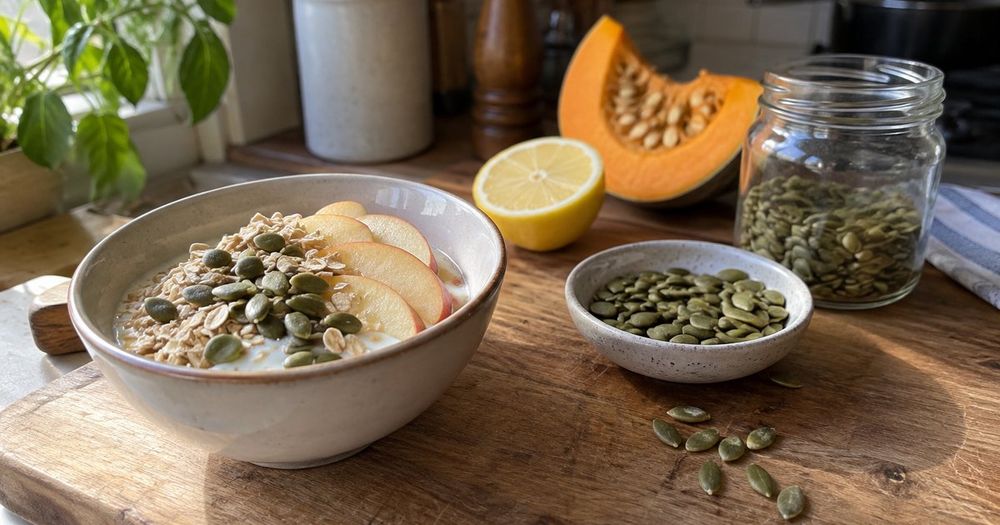
In short: Pumpkin seeds are one of the richest food sources of magnesium: one ounce of roasted seeds (about 28 g) has about 156 mg, roughly 37% of the Daily Value, plus 2.2 mg of zinc, according to the US National Institutes of Health. They also bring plant protein, fiber and mostly unsaturated fat, but they are calorie-dense, about 170 kcal per 30 g. A small handful a day, preferably unsalted, suits most people. Claims about curing prostate problems or insomnia go beyond the evidence.
Pumpkin seeds are a traditional snack that has made a comeback on salads, oats and yogurt. Here is what they actually offer, how much to eat, and what the research does and does not show.
Nutrition at a glance
Nutrient | Per ~30 g | Note |
|---|---|---|
Energy | about 172 kcal | label: 574 kcal per 100 g |
Protein | about 9 g | plant protein |
Fat | about 15 g (2.6 g saturated) | mostly unsaturated |
Carbohydrate | about 4 g | fiber 1.8 g, sugar under 0.5 g |
Magnesium | about 156 mg (1 oz roasted) | 37% DV (NIH) |
Zinc | about 2.2 mg (1 oz roasted) | 20% DV (NIH) |
Magnesium, zinc and iron
Adults need about 310–320 mg of magnesium a day (women) and 400–420 mg (men). The NIH lists roasted pumpkin seeds at the top of food sources, at 156 mg per ounce. Zinc needs are 8 mg (women) and 11 mg (men); an ounce gives 2.2 mg. Seeds also contain phytates, which bind zinc and reduce its absorption, and their iron is the non-heme type, which vitamin C helps you absorb, so pair them with tomatoes, peppers or lemon.
Tip: Before reaching for a magnesium supplement, try adding two tablespoons of pumpkin seeds to your salad or breakfast, and speak to your doctor first if you have kidney disease.
Pumpkin seeds and the prostate
The largest randomized trial, GRANU (Vahlensieck et al., 2015), followed 1,431 men aged 50–80 with urinary symptoms from benign prostate enlargement for 12 months. With 5 g of pumpkin seed twice daily, 58.5% improved by at least 5 points on the symptom score versus 47.3% on placebo; the seed extract was no better than placebo. The authors said the findings need confirmation. This suggests a modest benefit for symptoms, not a treatment, and urinary symptoms should be checked by a doctor.
Sleep, heart and weight
There are no strong trials showing pumpkin seeds improve sleep. Seeds and nuts are part of eating patterns linked with heart health in observational studies, which do not prove cause. Protein and fiber help fullness, but 100 g has over 570 kcal, so swap them for another snack rather than adding them on top.
How much to eat
A small handful of 20–30 g (two to three tablespoons) gives most of the mineral benefit with reasonable calories.
Note: The CDC lists whole nuts and seeds, and spoonfuls of nut or seed butter, as choking hazards for young children; serve them finely ground or mixed into food. Salted seeds add sodium, and the WHO advises adults to keep salt under 5 g a day. Avoid them if you have a seed allergy and check “may contain nuts” warnings.
Choosing, storing and using them
- Pick seeds with a single ingredient and no added salt for everyday use.
- A sharp smell or bitter taste means the fats have gone rancid.
- After opening, keep them airtight, away from heat, ideally in the fridge in hot weather.
- Toast raw seeds in a dry pan for 3–5 minutes, stirring until they pop.
- Sprinkle on oats, salads or yogurt, or blend into a herb sauce. Pumpkin seed butter is an option for people avoiding peanuts; read the label as explained in our peanut butter guide. For more on fiber, see our soluble fiber guide.
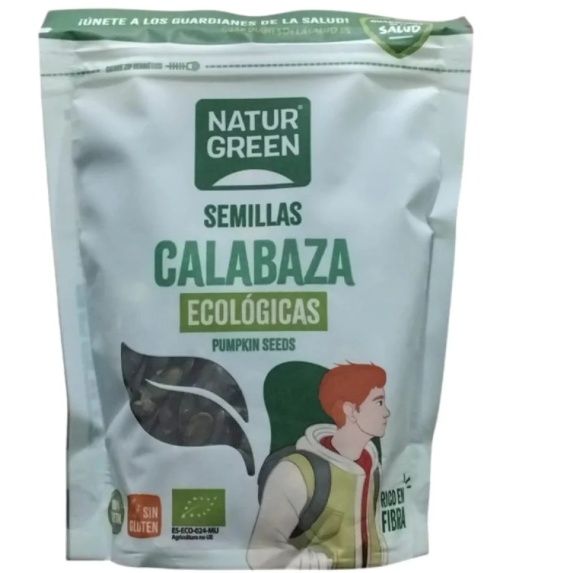
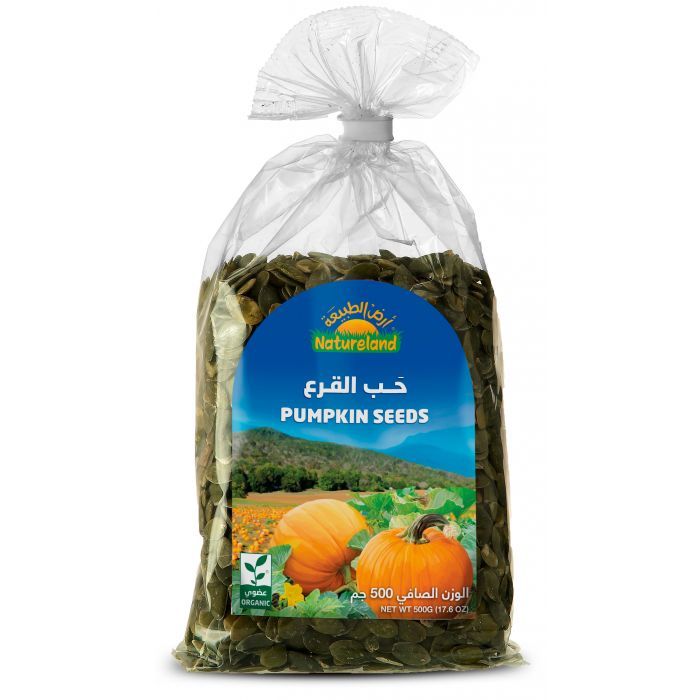
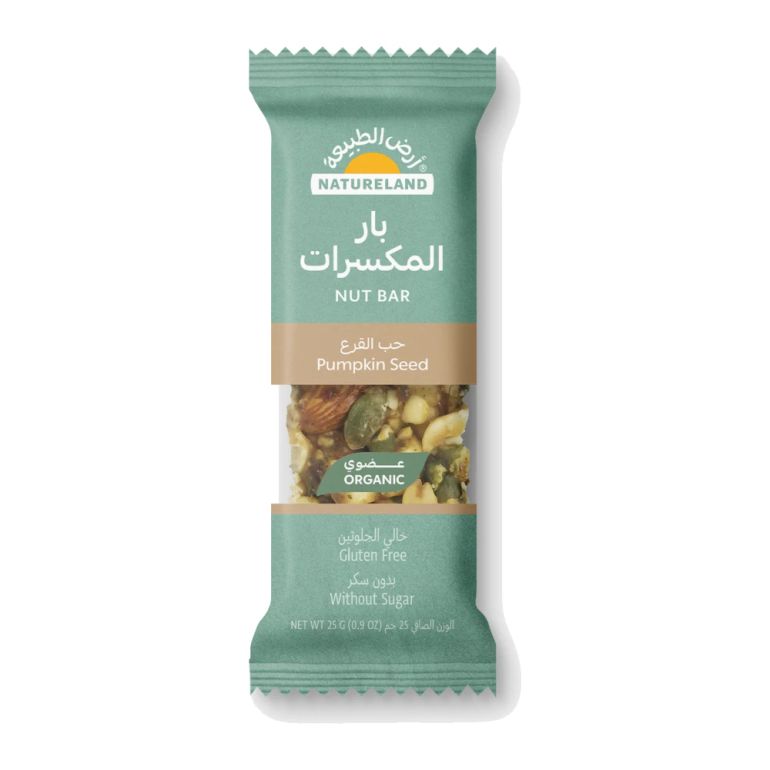
At Green Spot you will find Nature Green organic pumpkin seeds 225g, Natureland organic hulled pumpkin seeds 500g, the Natureland pumpkin seed bar with no added sugar and Biona organic pumpkin seed butter, or browse the rice, grains and seeds section.
FAQ
Can I eat them every day?
Yes, for most healthy people, as a small handful within your daily calories, preferably unsalted.
Do they replace a magnesium or zinc supplement?
They can cover a good part of your magnesium needs, but a diagnosed deficiency should be treated as your doctor advises.
Do they treat an enlarged prostate?
No. The largest trial found a modest improvement in symptoms that still needs confirmation.
References
- National Institutes of Health, Office of Dietary Supplements. Magnesium: Fact Sheet for Health Professionals.
- National Institutes of Health, Office of Dietary Supplements. Zinc: Fact Sheet for Health Professionals.
- National Institutes of Health, Office of Dietary Supplements. Iron: Fact Sheet for Health Professionals.
- Vahlensieck W, et al. Effects of pumpkin seed in men with lower urinary tract symptoms due to benign prostatic hyperplasia in the one-year, randomized, placebo-controlled GRANU study. Urol Int. 2015;94(3):286-295.
- CDC. Choking Hazards (Infant and Toddler Nutrition).
- World Health Organization. Sodium reduction (fact sheet).
This article is for general education and does not replace medical advice.