
In short: Kettle chips differ from regular chips in how they are fried and how crunchy they are, but their nutrition is very similar: a small serving (28 g, about a handful) has around 150 calories and 9 to 10 g of fat. Chips are fine as an occasional snack, and the secret is three things: read the label per 100 g, watch the salt, and pour your portion into a bowl instead of eating from the bag.
Chips are one of the most popular snacks at home, on trips and during matches. In recent years, bags labeled "kettle cooked", "gluten-free" and "sea salt" have started to suggest a healthier choice. Is that true? This article explains the real difference between chip types, how to read the label in a minute, and how to enjoy chips without turning them into a daily habit that raises your salt and calories.
What is the difference between kettle and regular chips?
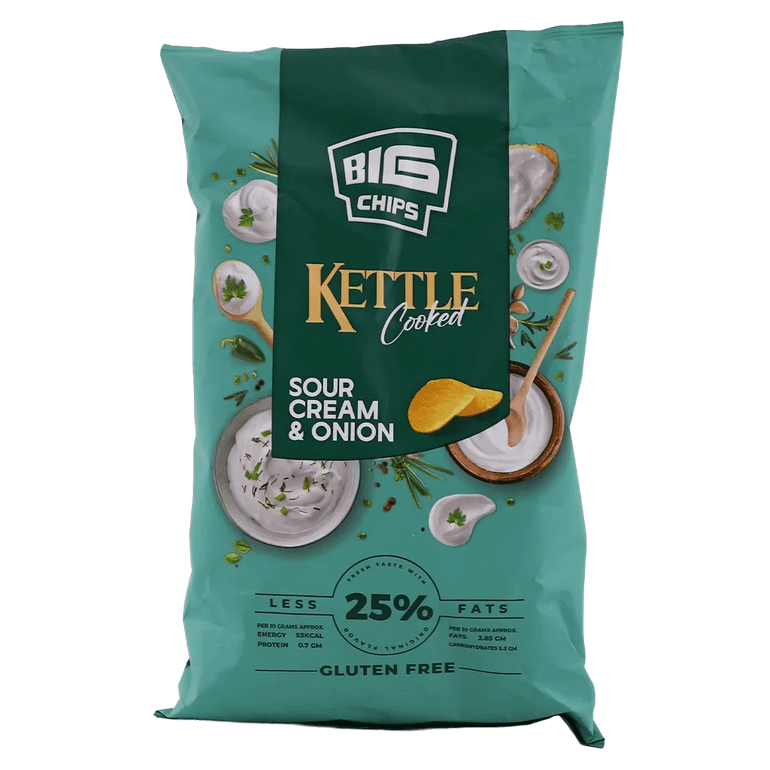
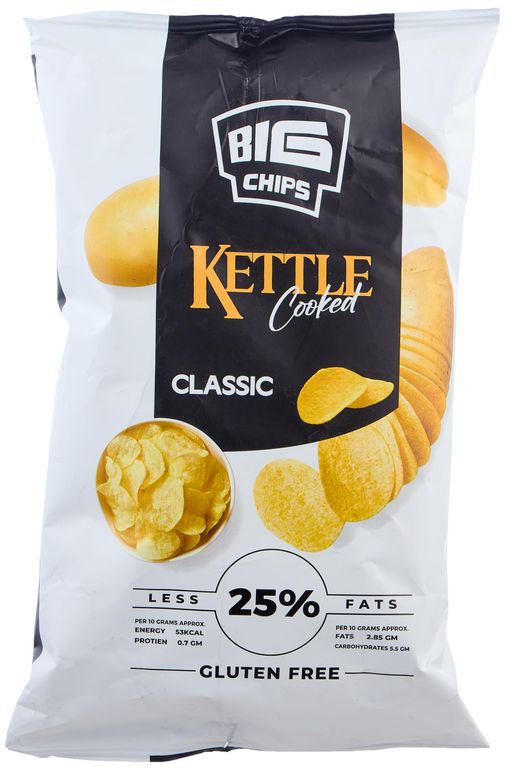
"Kettle" means potato slices are fried in small batches in deep vats, rather than continuously on fast production lines. When cold slices are added, the oil temperature drops and then slowly rises, so the slices come out thicker and crunchier, often darker golden with curled edges.
Nutritionally, though, published comparisons of popular labels show the difference is small: the same serving of both types has similar calories, fat and carbohydrates. So "kettle" describes the cooking method and texture, not a health claim.
The same applies to other phrases on the bag:
- "Gluten-free": very important for people with coeliac disease or wheat allergy, but it does not mean fewer calories. Potatoes are naturally gluten-free.
- "Sea salt": sea salt is salt, with about the same sodium as table salt.
- "Real potatoes": describes the ingredient, not the nutrition.
How many calories and how much fat?
Figures vary by product, but the general picture for a 28 g serving (about one handful) of fried potato chips, regular or kettle:
Nutrient | About per 28 g | About per 140 g bag |
|---|---|---|
Calories | 140 to 160 kcal | 700 to 800 kcal |
Fat | 8 to 10 g | 40 to 50 g |
Carbohydrates | 14 to 16 g | 70 to 80 g |
Protein | About 2 g | About 10 g |
Notice the second column: a 140 g bag is not "one serving" but about five. Eating it all in one sitting gives you close to the calories of a full meal, without real fullness because protein and fiber are low.
What about "baked" or "reduced fat" versions? They often do have less fat, but not necessarily proportionally fewer calories, because some brands replace the fat with extra starch or flavorings. So don't rely on the front-of-pack phrase; compare the calories and salt in the back panel before you decide.
Tip: Pour your portion into a small bowl and put the bag back in the cupboard. Eating straight from the bag, especially in front of a screen, makes it very hard to judge how much you've had.
Salt: the point many people forget
The World Health Organization recommends adults have less than 2,000 mg of sodium a day, which is less than 5 g of salt, just under a teaspoon. WHO estimates that the global average intake is more than double that, and a large share comes from processed foods.
Chips alone may not push you over the limit, but the problem is the build-up: bread, cheese, pickles, sauces and fast food, then a bag of chips in the evening. Added flavors such as "sour cream and onion" or "cheese" sometimes contain more salt than plain, plus ingredients like milk powder and sometimes flavor enhancers.
A useful conversion: 1 g of salt = 400 mg of sodium. Some labels list "salt" and others "sodium", so multiply sodium by 2.5 to get salt.
How to read a chips label in a minute
The golden rule: always compare the "per 100 g" column, because "serving" sizes differ between brands. These are the criteria the NHS uses to decide whether a product is high or low in each nutrient:
Nutrient (per 100 g) | Low | High |
|---|---|---|
Total fat | 3 g or less | More than 17.5 g |
Saturated fat | 1.5 g or less | More than 5 g |
Sugar | 5 g or less | More than 22.5 g |
Salt | 0.3 g or less | More than 1.5 g |
Most fried chips will be "high" in total fat because they are fried, which is expected. So when comparing two products, focus on:
- Salt per 100 g: choose the lower one; the difference between flavors can be large.
- Saturated fat: plant oils such as sunflower are lower in saturated fat than palm oil. Check the oil type in the ingredients.
- The ingredient list: the shorter and clearer it is (potatoes, oil, salt, seasoning), the easier it is to know what you're eating.
- Allergens: sour cream and cheese flavors usually contain milk derivatives, which matters for people with milk allergy.
Note: "Gluten-free" on the bag is not enough on its own for people with coeliac disease if the label also says "may contain traces of wheat". Read the cross-contamination warnings.
How to enjoy chips more wisely
- Make them a side, not a meal: a handful of chips with a salad or a sandwich that has protein beats a whole bag on its own.
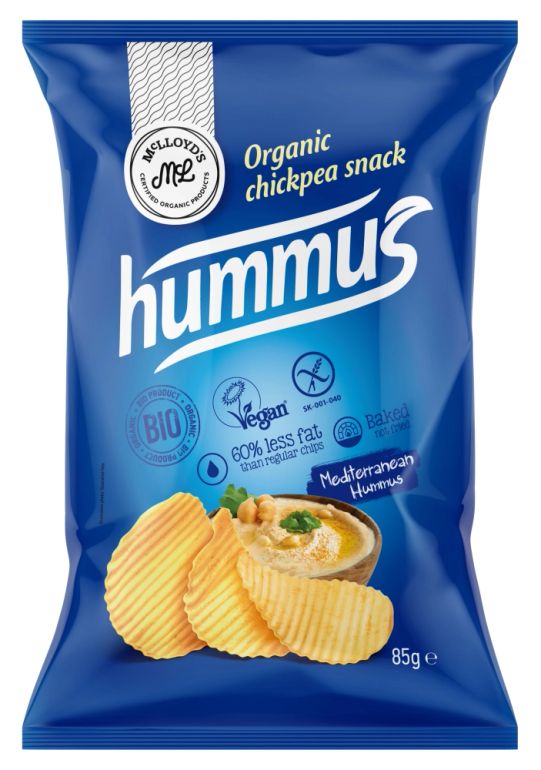
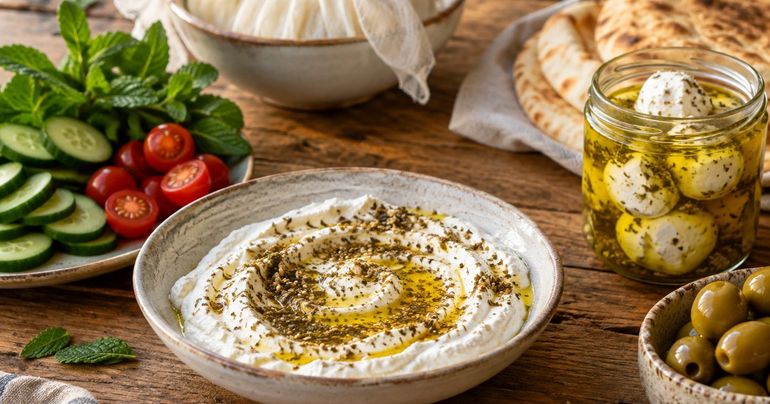
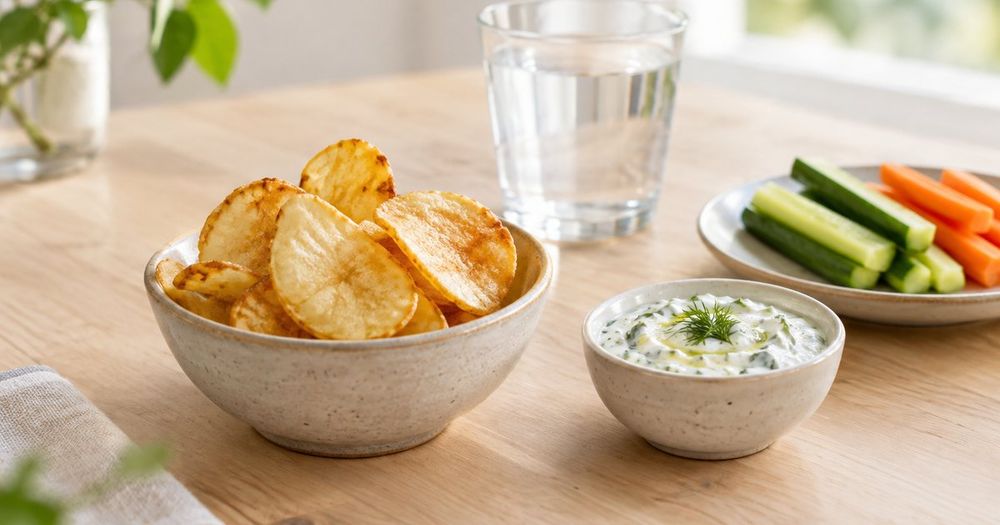
- Pair them with a protein dip: herby Greek yogurt or hummus with tahini adds protein and fiber and boosts fullness.
- Buy smaller packs if portion control is hard: large bags suit sharing at gatherings, not solo snacking.
- Drink water: salty food makes you thirsty, and water is better than sugary soft drinks with it.
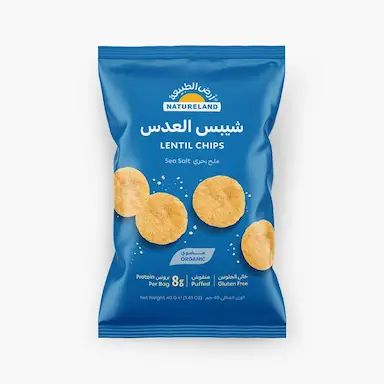
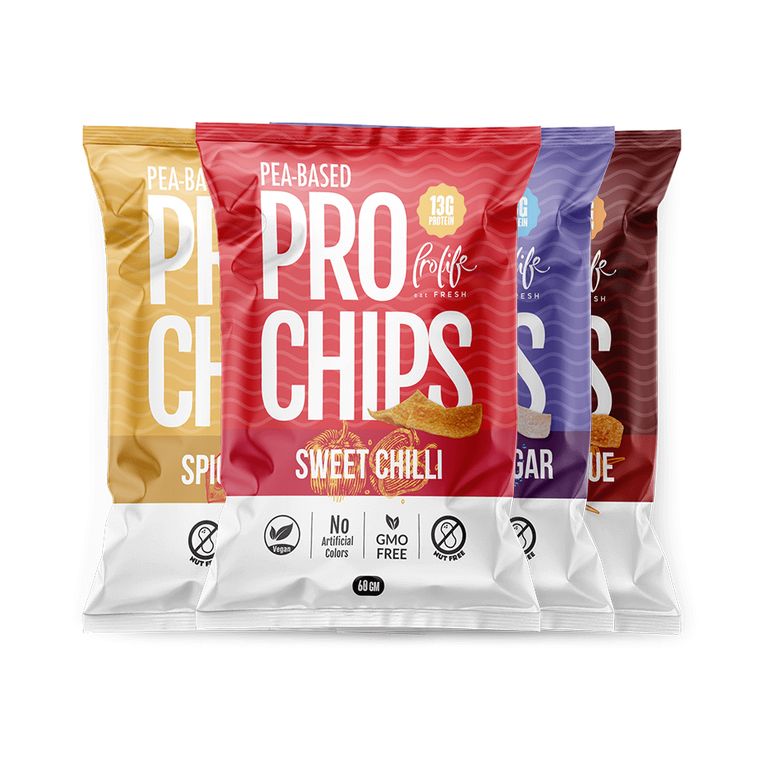
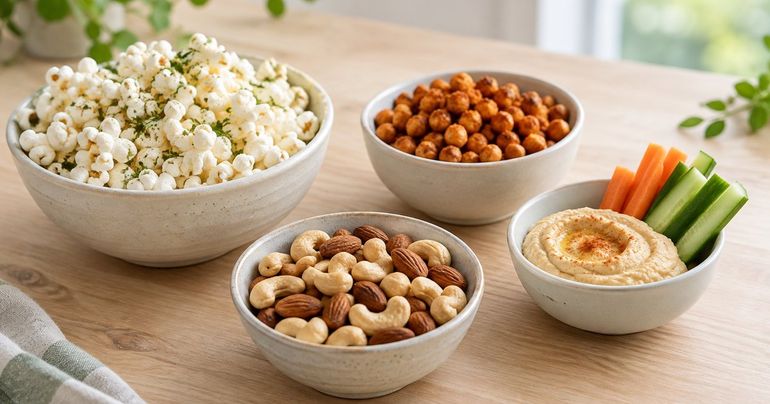
- Vary your salty snacks: lentil or chickpea chips, home-popped popcorn and unsalted nuts all differ in fiber and protein. We'll cover them in detail in an upcoming article on chip alternatives.
Chips and children
Children need less salt than adults, and WHO recommends lowering the limit based on their energy needs. A small portion of chips at an occasion or on a trip is fine, but don't make it a daily lunchbox snack. For very young children, note that thick, crunchy chips can be a choking hazard under 4, as we explained in our article on snacks for babies and children.
Storing chips after opening
Moisture and air take away crunch, while heat and light speed up oil rancidity. Fold the bag tightly with a clip and keep it in a dry cupboard away from the oven and sunlight. If the smell changes and resembles old oil, that is a sign of rancidity.
Frequently asked questions
Are kettle chips healthier than regular chips?
There is no big nutritional difference. The difference is in frying method, texture and taste; calories and fat are similar for the same amount.
How many servings are in a 140 g bag?
About five 28 g servings, or roughly 700 to 800 calories for the whole bag depending on the product.
Are chips keto-friendly?
No. Potato chips are high in carbohydrates, with about 15 g in a single handful.
Does "gluten-free" mean healthy?
It means suitable for people avoiding gluten, but it does not change calories, fat or salt.
References
- World Health Organization. Sodium reduction – fact sheet.
- NHS. Food labelling terms.
- NHS. How to read food labels.
- World Cancer Research Fund UK (2023). Guide to Food Labelling.
- Tasting Table. Kettle Chips vs. Regular Chips: What's the Nutritional Difference?
This article is for general education and does not replace advice from a doctor or dietitian, especially for people with high blood pressure, kidney disease or on a low-salt diet.