
In short: Peanut butter is nutritious but calorie-dense: two tablespoons (about 32–34 g) provide roughly 190–210 kcal depending on the brand. The best jars list peanuts only (or peanuts and salt) with no added sugar or hydrogenated oils. Observational studies link eating nuts and peanuts with lower heart-disease risk, but peanut butter itself was not clearly associated with a difference in the largest analysis. It is unsuitable for people with peanut allergy, and babies should never be given it on its own from a spoon because of choking risk.
Peanut butter is a breakfast staple. It can be a useful choice if you pick the right jar and watch the portion, because there is a big difference between a jar of plain peanuts and one with added sugar and oils.
What counts as peanut butter?
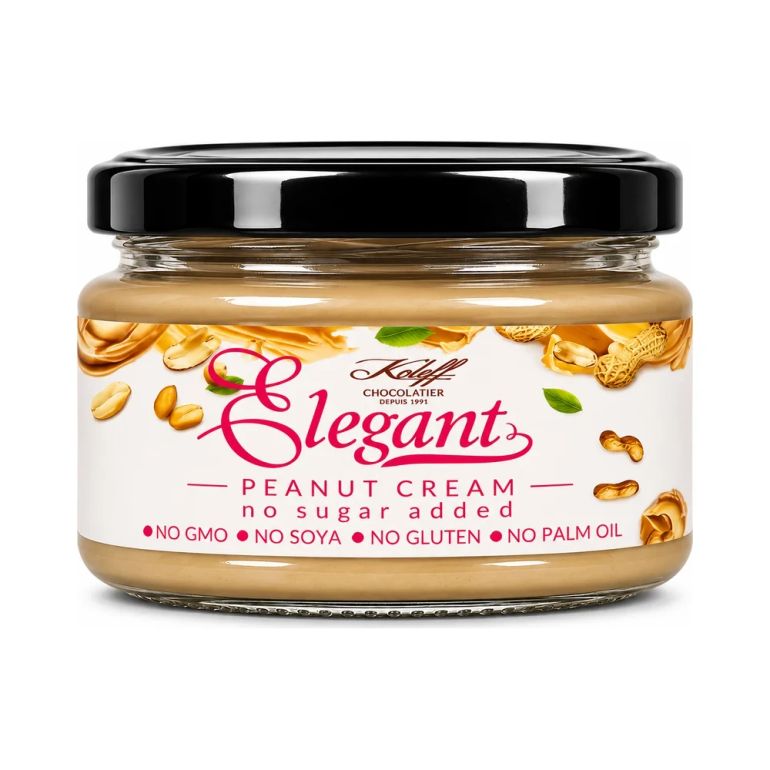
Under the US standard of identity (21 CFR 164.150), peanut butter is ground roasted peanuts; seasonings and stabilisers may not exceed 10% of the weight, fat may not exceed 55%, and artificial sweeteners, chemical preservatives and colours are not allowed. Products called "spreads" or "creams" may contain more added ingredients, so read the ingredient list, not just the name.
Nutrition per two tablespoons
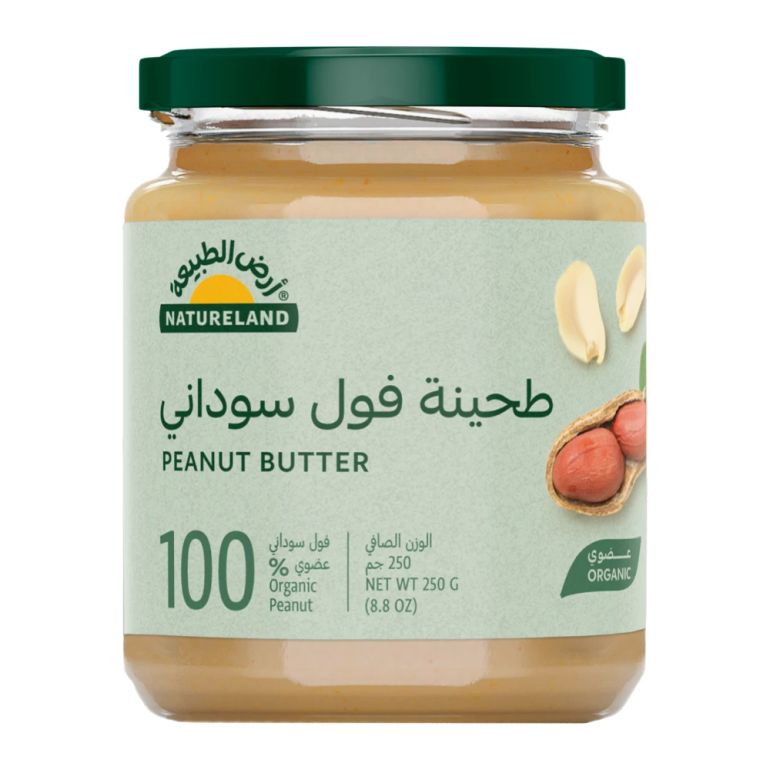
Cleveland Clinic notes most store-bought peanut butter has about 190–200 kcal per two-tablespoon serving, with a couple of grams of saturated fat and mostly unsaturated fat. As a real example, the label of Natureland organic peanut butter (peanuts only) lists per 34 g:
Nutrient | Per 34 g (2 tbsp) |
|---|---|
Energy | 210 kcal |
Total fat | 17 g (3.5 g saturated) |
Protein | 10 g |
Carbohydrate | 6 g (2 g fibre) |
Sugars | 2 g (0 g added) |
Sodium | 0 mg |
Most of the energy comes from fat. Protein is useful but it is a tasty, filling addition rather than your main protein source. For protein snacks, see our guide to ready-made protein snacks.
Is it good for your heart?
A large Harvard analysis (Guasch-Ferré et al., 2017; 210,000+ people followed up to 32 years) linked eating a 28 g serving of nuts five or more times a week with about 14% lower cardiovascular and 20% lower coronary heart disease risk, and peanuts were among the nuts linked with lower risk. However, peanut butter itself was not significantly associated with cardiovascular disease (which does not mean it is harmful), and these are observational studies that show association, not cause.
Tip: A sensible portion is one to two level tablespoons. Use a real spoon rather than scooping from the jar.
How to choose from the label
- Ingredients: peanuts only, or peanuts and salt. Avoid added sugar, hydrogenated oils, palm oil and corn syrup (Cleveland Clinic).
- Salt: choose unsalted if you watch sodium.
- Oil separation is normal in natural peanut butter; stir well and consider refrigerating after opening. Jars that never separate usually contain a stabiliser.
- Smooth vs crunchy: texture only; nutrition is very similar.
- "High protein" or "keto" versions may contain added protein or sweeteners such as erythritol or maltitol; check which and how much.
Compare options in our nut butters and jams category, including Mayver's organic smooth peanut butter with no added sugar.
Peanut, almond or hazelnut butter?
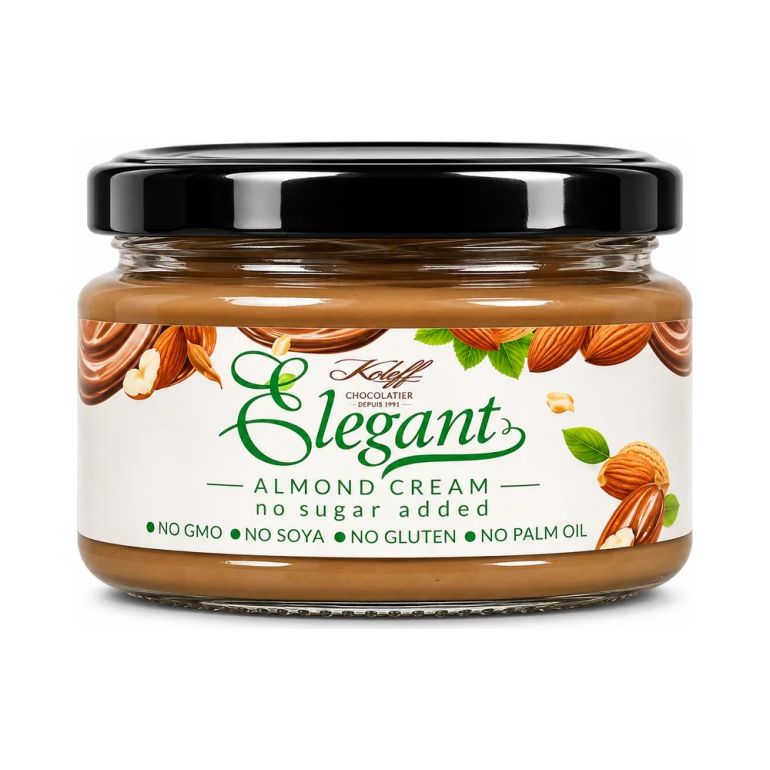
They are made the same way and are all energy-dense. Differences are mostly taste, price and allergy type. Peanuts are legumes, not tree nuts, but some people react to both and many factories process them on shared lines, so check "may contain" warnings and follow your doctor's advice.
Healthy breakfast ideas
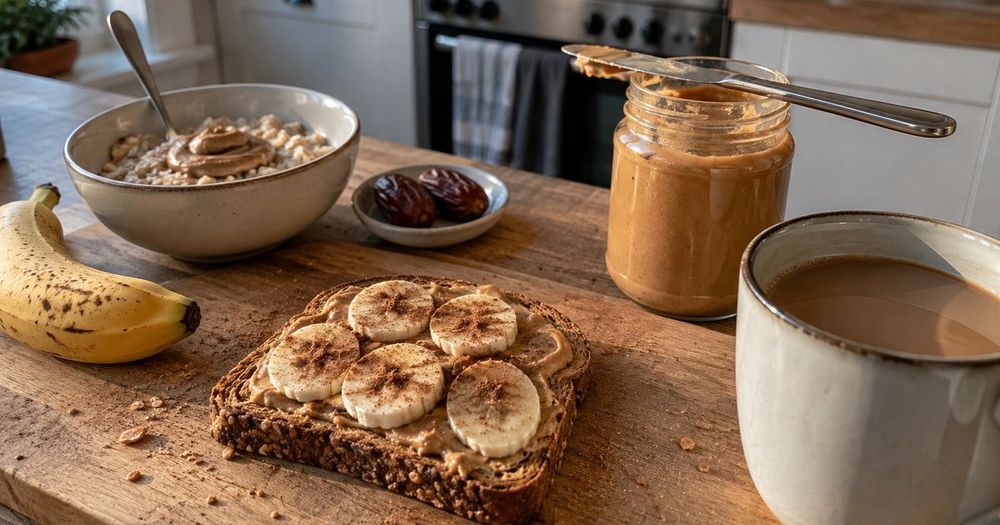
- Wholegrain or sourdough toast with banana and cinnamon.
- Warm oats cooked in milk, topped with a spoon of peanut butter and berries instead of sugar.
- Plain Greek yoghurt with a teaspoon of peanut butter and a little granola.
- Two or three dates stuffed with a little peanut butter (watch the portion; dates are high in natural sugar).
- Apple slices for dipping.
- A smoothie of milk, frozen banana, a spoon of peanut butter and oats, no honey needed.
Note: Peanut allergy can be serious; seek urgent help for swelling or breathing difficulty. The NHS advises not to give babies nut butter on its own because they could choke; spread it on food such as toast, and do not give whole nuts to children under 5. If there is a family history of allergy, or a baby has severe eczema or egg allergy, talk to your doctor before introducing peanut.
Storage and safety
Keep the jar closed in a cool, dry place (or the fridge for natural types in hot weather), use a clean dry spoon, and discard it if it tastes bitter or smells rancid. Aflatoxins are mould toxins that can occur in peanuts and nuts; EFSA classifies them as genotoxic carcinogens whose intake should be kept as low as possible, so maximum limits apply and products are monitored. Buy from trusted sources and never eat mouldy peanuts.
FAQ
Does peanut butter cause weight gain?
Only if total calories exceed your needs. Portion size is what matters.
Smooth or crunchy?
Nutritionally very similar; it is a texture preference.
Is it keto-friendly?
No-added-sugar types are relatively low in carbohydrate but high in calories; check the label.
References
- U.S. FDA / eCFR. 21 CFR 164.150 — Peanut butter (standard of identity).
- Harvard T.H. Chan School of Public Health, The Nutrition Source. Nuts for the heart (Guasch-Ferré et al., J Am Coll Cardiol 2017).
- Cleveland Clinic. What You Should Know About Peanut Butter and Cholesterol. 2020.
- NHS. Foods to avoid giving babies and young children. Reviewed 2026.
- NIAID. Addendum Guidelines for the Prevention of Peanut Allergy — Appendix D: Instructions for home feeding of peanut protein. 2017.
- EFSA. Aflatoxins in food.
This article is for general education and does not replace medical advice.