
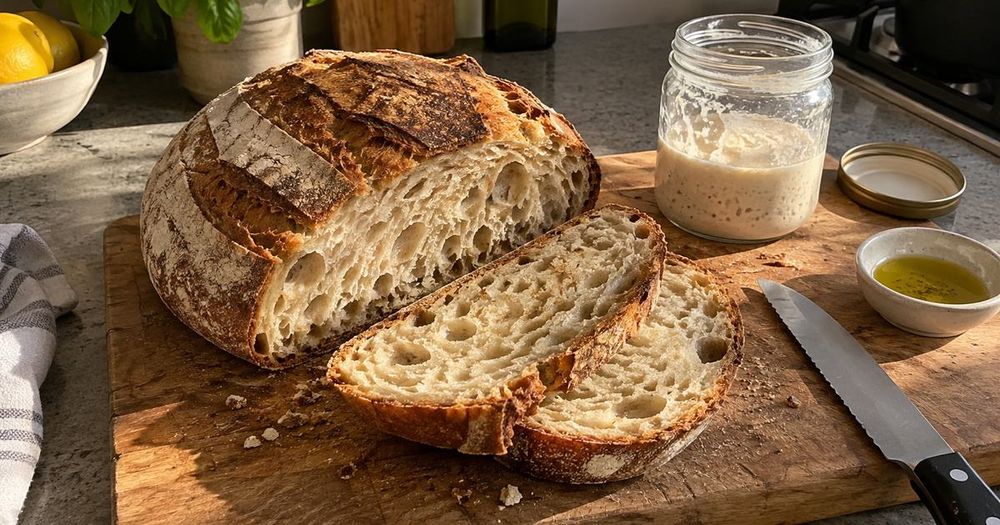
Sourdough is bread leavened with a live starter culture instead of commercial baker's yeast, and it ferments for much longer. That gives it a mild tang and a crisp crust. Is it really healthier than ordinary bread? There are real differences, but they are smaller than marketing suggests and depend on the flour and the process.
In short: Genuine sourdough is flour, water and salt fermented for hours by lactic acid bacteria and wild yeasts. A 2024 systematic review of 18 trials found a slightly smaller rise in blood sugar than with industrial bread, especially for whole wheat sourdough, but the certainty of evidence was low. Sourdough is not gluten-free, so it is not suitable for coeliac disease.
What is sourdough?
Sourdough is a process, not a flavour. A live starter of flour and water, home to lactic acid bacteria and wild yeasts, is added to the dough, which then ferments for many hours (often more than 12 in traditional methods). The Real Bread Campaign defines genuine sourdough as bread leavened only with a live starter, with no baker's yeast, chemical raising agents or additives.
Genuine sourdough vs "sourfaux"
The word is not legally protected in most countries. Some loaves are made quickly with baker's yeast and soured with vinegar, yoghurt or dried sourdough powder. Most of the differences attributed to sourdough come from long fermentation, which quick bread does not get. Check the ingredients: flour, water, salt and starter is a good sign; yeast, vinegar or sourdough powder suggests a shortcut.
What the research says
- Blood sugar: Rolim et al. (2024) pooled 18 trials and found a smaller glucose rise at 60 and 120 minutes than with industrial bread, clearest for whole wheat sourdough. Certainty was low to very low, and fasting insulin and the satiety hormone PYY did not change.
- Minerals: in a lab study, sourdough fermentation cut phytate in whole wheat bread by about 62%, against 38% with yeast, and increased soluble magnesium (Lopez et al., 2001). This does not prove a meaningful health effect in people.
- Digestion and IBS: Monash University explains that traditional long fermentation lowers FODMAPs, and spelt sourdough and some traditional sourdoughs tested low FODMAP. This does not apply to every loaf labelled sourdough.
- Live bacteria: baking kills the microbes, so sourdough is not a probiotic food.
Note: Beyond Celiac states that regular wheat or rye sourdough still contains gluten above the 20 ppm gluten-free threshold. With coeliac disease, eat only sourdough clearly labelled gluten-free. See our gluten-free label guide.
How to choose and store it
- Pick whole wheat or rye for more fibre.
- Watch the salt: WHO advises adults to keep below 5 g of salt a day and lists bread among foods that can be high in it.
- Cheese, jalapeno and olive loaves are usually higher in salt and calories than plain or multigrain.
- Keep fresh bread in a paper or cloth bag and freeze sliced bread if you will not finish it soon (NMSU lists 3 to 5 months in the freezer).
- If bread shows mould, USDA advises discarding it, because mould can spread below the surface of porous foods.
Tip: Pair a slice of whole grain sourdough with protein (eggs, labneh or hummus) and vegetables for a more balanced breakfast. For more on fermented foods that do contain live microbes, read our fermented foods guide.
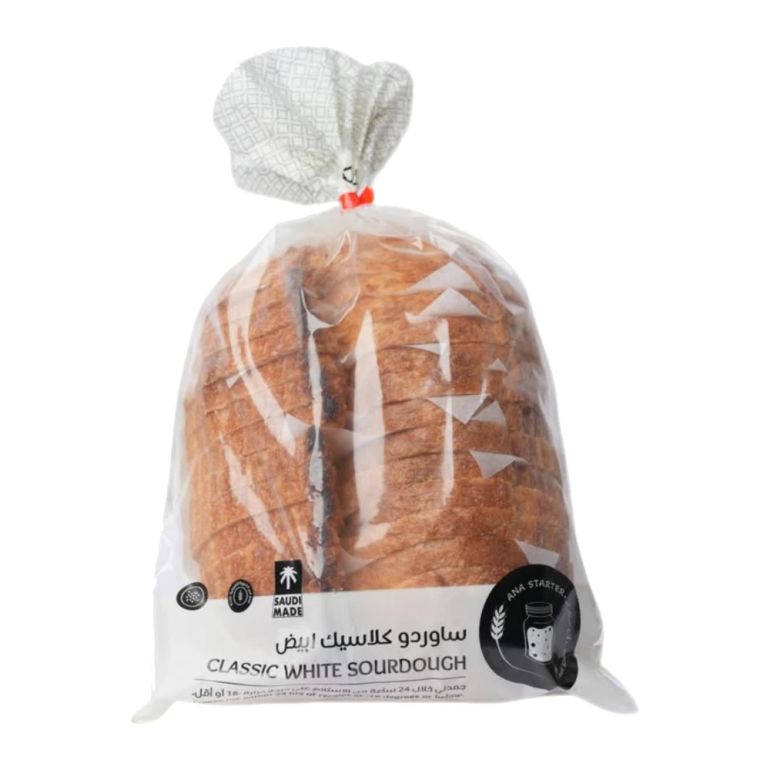
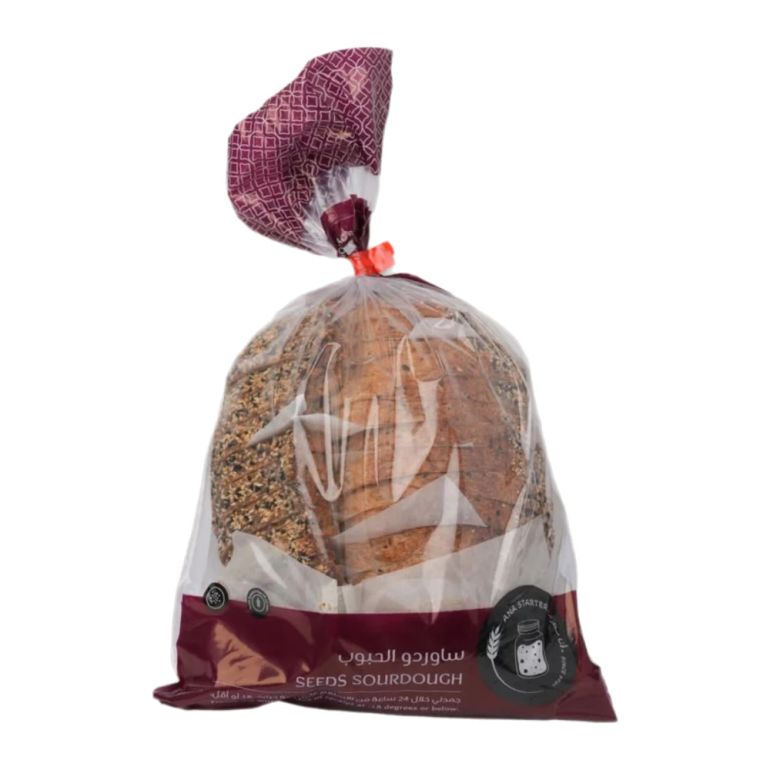
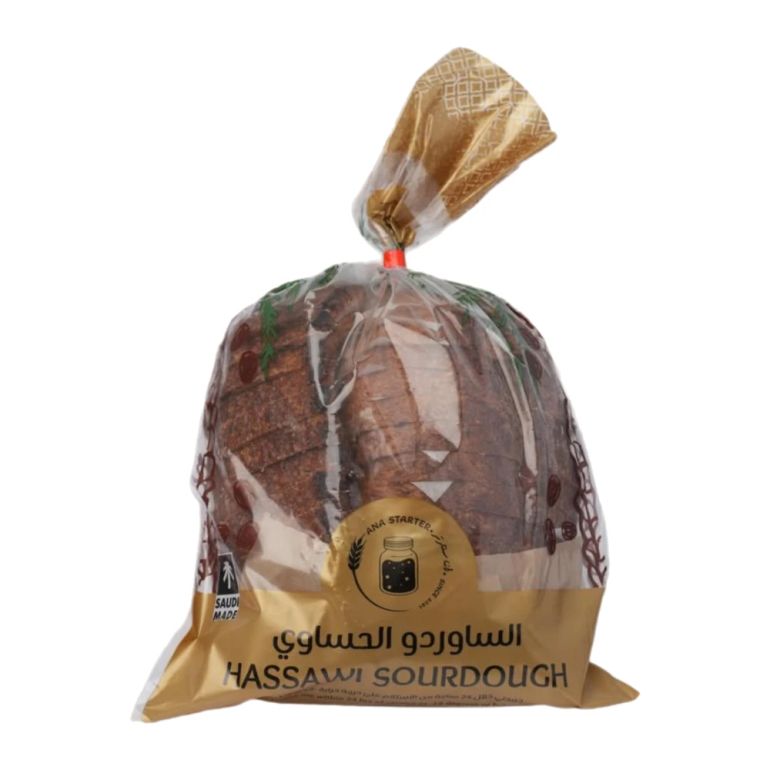
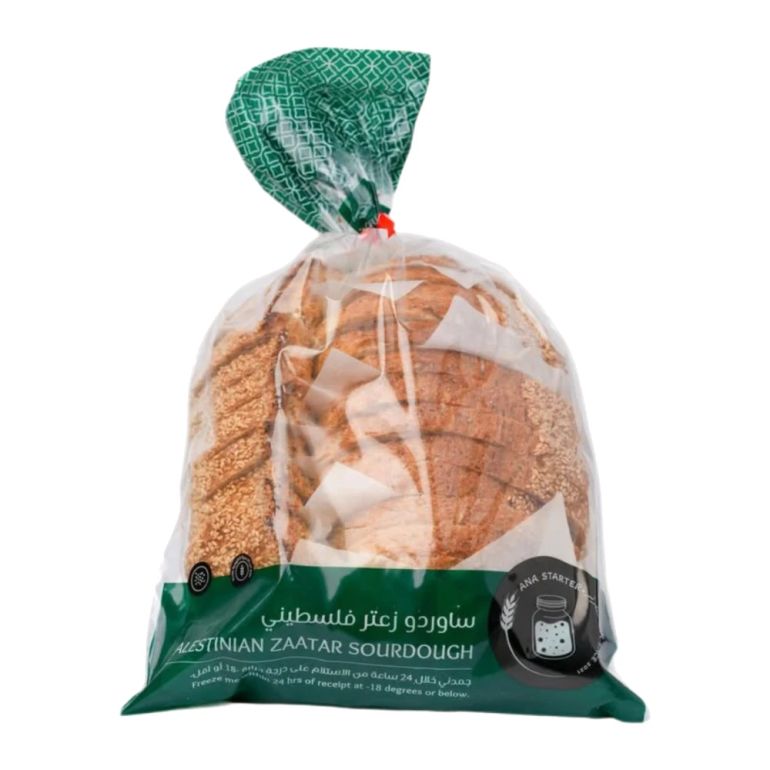
Green Spot carries naturally fermented sourdough loaves, including plain, whole wheat and rye, multigrain, Hasawi, thyme, and olive and herb. Browse the available loaves below and choose by the ingredient list, not the name.
FAQ
Is sourdough good for diabetes?
It may raise blood sugar slightly less than industrial bread, but it is still a carbohydrate food. Count the portion and ask your doctor or dietitian.
Is sourdough gluten-free?
No, unless it is made with gluten-free flour and labelled as such.
Does sourdough contain probiotics?
Not expected, because baking kills the bacteria.
References
- Rolim ME, et al. Crit Rev Food Sci Nutr. 2024;64(3):801–816. doi:10.1080/10408398.2022.2108756
- Lopez HW, et al. J Agric Food Chem. 2001;49(5):2657–2662. doi:10.1021/jf001255z
- Monash University FODMAP. Sourdough processing & FODMAPs (2017). monashfodmap.com
- Beyond Celiac. Is Sourdough Bread Gluten-Free? beyondceliac.org
- WHO. Sodium reduction (2026). who.int
- Real Bread Campaign (Sustain). Sourdough. sustainweb.org
- USDA FSIS. Molds on Food: Are They Dangerous? fsis.usda.gov
- New Mexico State University. Storing Food Safely, Guide E-118 (2025). pubs.nmsu.edu
This article is for general education and does not replace medical advice.