
In short: Extra virgin olive oil is one of the best fats you can keep in your kitchen. The strongest evidence comes from the PREDIMED trial, where a Mediterranean diet rich in it was linked to about 30% fewer major heart events in people at high risk. The biggest benefit shows up when it replaces saturated fats like ghee and butter, not when it is added on top. It is fine for everyday cooking, but it is calorie-dense: one tablespoon has about 120 calories.
Olive oil has been in our kitchens for centuries, and it comes with plenty of stories: "don't cook with it, it burns", "drink a spoon on an empty stomach", "the more expensive, the better". This article separates what research actually says from habit and marketing, and explains how to choose a good oil, how to cook with it and how to store it.
What does "extra virgin" mean?
Olive oil comes in different grades, and the highest is extra virgin. This grade means the oil was extracted from olives by mechanical means only, by pressing or centrifuge, with no chemical solvents and no refining. Its free acidity must be low (no more than 0.8%), and it must pass a taste test showing it is free of defects.
Plain "olive oil" or "light" olive oil is usually a blend of refined oil with a little virgin oil. Refining removes aroma and flavor, and with them a large share of the beneficial plant compounds. "Light" means light in taste, not in calories.
"Cold extracted" means the olive paste was not heated above a set limit (27°C under European standards), which helps protect flavor and heat-sensitive compounds.
What does research say about its benefits?
Heart and arteries: the strongest evidence
The best-known study is the Spanish PREDIMED trial, which included 7,447 people at high risk of heart disease and randomly assigned them to three groups: a Mediterranean diet with extra virgin olive oil (about 4 tablespoons a day), a Mediterranean diet with nuts, or a reduced-fat control diet. After about five years, major cardiovascular events (heart attack, stroke and cardiovascular death) were about 30% lower in the olive oil group.
For honesty: the first version of the study was retracted in 2018 because of randomization errors at some sites, then re-analyzed and republished in the same journal, with a similar result. But note that the trial tested a whole dietary pattern that included olive oil, not olive oil on its own.
Cholesterol: only when it replaces other fats
The US FDA allows a "qualified" health claim stating that supportive but not conclusive evidence suggests that about 1.5 tablespoons (20 g) a day of oils high in oleic acid, including olive oil, may reduce the risk of coronary heart disease, provided they replace saturated fats and do not increase total daily calories. The studies the FDA reviewed found the benefit only when the oils replaced other fats.
Tip: The benefit is in the swap. Cook with olive oil instead of ghee or butter, and use it in salad instead of heavy ready-made dressings, rather than adding it on top of your usual food.
Plant compounds (polyphenols)
Extra virgin olive oil contains compounds called polyphenols, such as hydroxytyrosol and oleocanthal, which are partly responsible for its mild bitterness and the peppery sting in the throat. They are widely researched, but most of their specific benefits are still being studied, so do not trust anyone who presents them as a cure for any disease.
Can you cook and fry with olive oil?
This is the most common myth. It is true that extra virgin olive oil has a lower smoke point than some refined oils, but smoke point is not the best measure. What matters is how stable the oil is under heat, meaning how much it breaks down and forms harmful compounds.
In a 2018 Australian study, ten common oils were heated gradually to 240°C, then used for frying for 6 hours at 180°C. Extra virgin olive oil produced the lowest amount of "polar compounds" formed when oil breaks down, followed by coconut oil, while canola oil produced more than two and a half times as much as olive oil. The reason is that its monounsaturated fats are more stable, and its natural antioxidants protect it.
A note for transparency: the laboratory that ran the study belongs to an olive oil producer, but its findings agree with other independent studies on olive oil stability during frying.
In practice: extra virgin olive oil works for sautéing, everyday cooking and baking. Deep frying in any oil is not the preferred healthy method because it adds a lot of calories to food, and reusing frying oil many times increases harmful compounds.
Note: Olive oil is healthy, but it is pure fat. A tablespoon has about 120 calories. If you are watching your weight, measure with a spoon instead of pouring straight from the bottle.
How to choose a good olive oil
- Read the grade: choose "extra virgin" if you want the flavor and plant compounds. "Olive oil" or "light" usually means refined oil.
- Harvest or production date: oil loses flavor and compounds over time. If a harvest date is shown, choose the most recent; otherwise go by the latest best-before date.
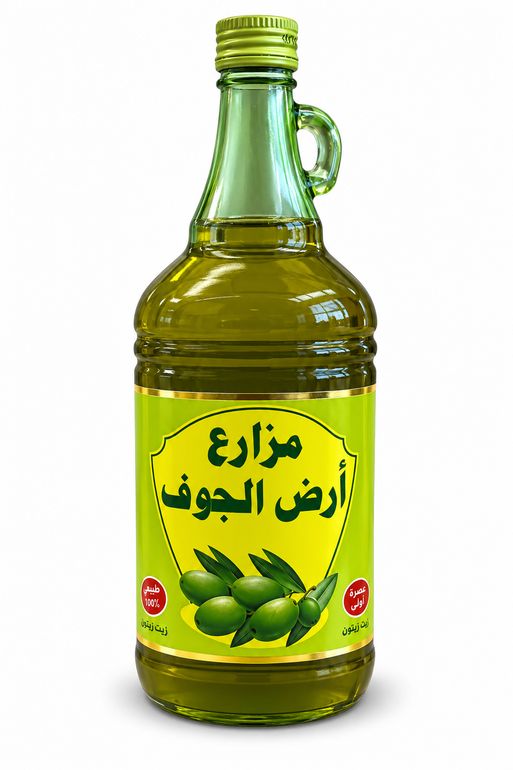
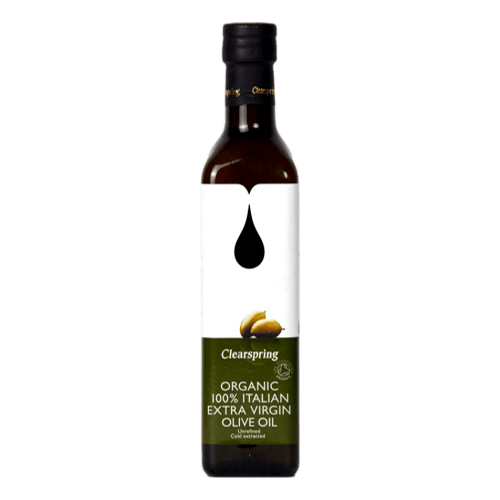
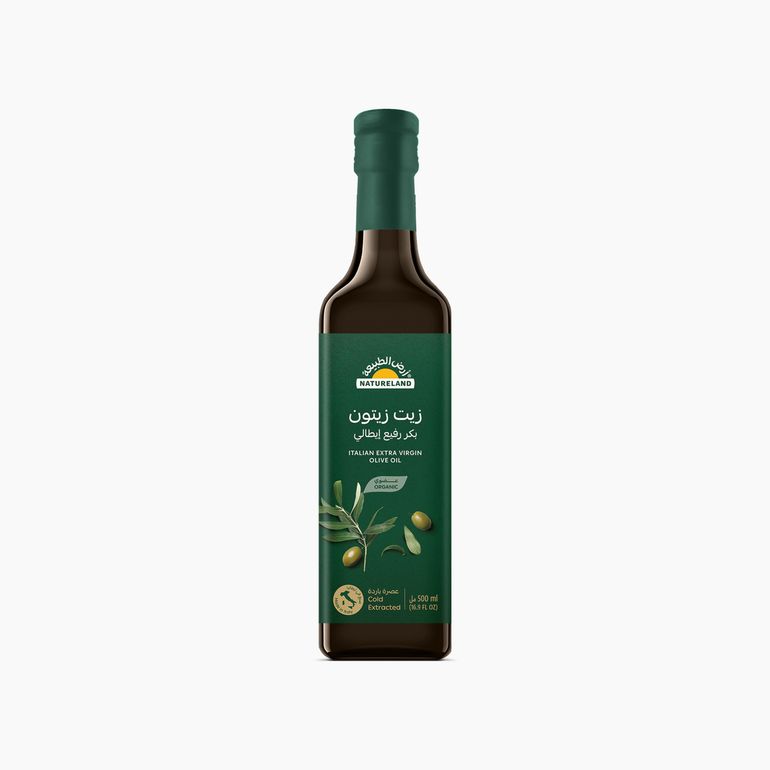
- Packaging: dark glass or tins protect oil from light better than clear plastic.
- Size: choose a size you will use within one or two months of opening, because air slowly oxidizes the oil.
- Taste: good oil smells fruity or grassy and tastes mildly bitter with a peppery sting. A waxy, paint-like smell or sour taste is a sign of rancid oil.
- "Organic": means the olives were grown to organic farming standards. That is a good personal choice, but it does not necessarily mean more health benefits than a non-organic extra virgin oil.
Simple ways to use it every day
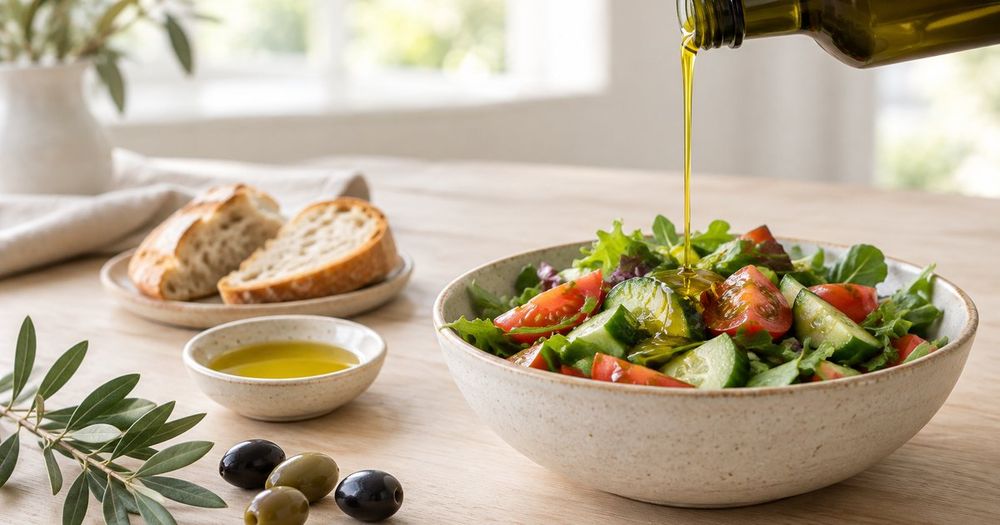
- Salad: three spoons of oil with one spoon of lemon or vinegar, a little salt and garlic. A simple dressing beats most ready-made ones.
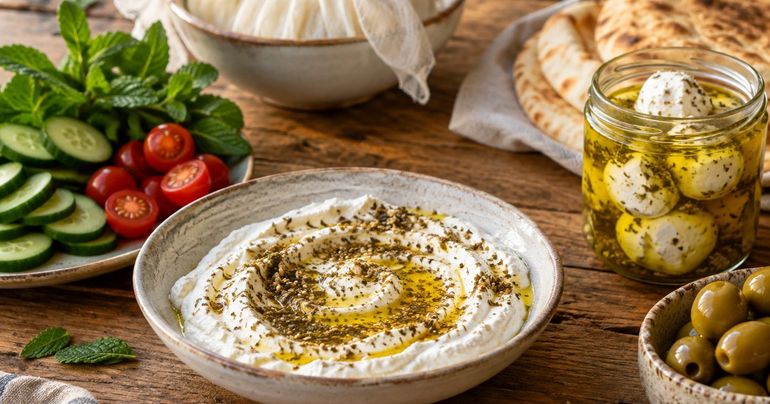
- Finishing touch: a drizzle over foul, hummus, labneh or soup after serving.
- Roasted vegetables: toss vegetables with a spoon of oil and spices before roasting; the oil also helps you absorb fat-soluble vitamins such as A and K.
- Instead of ghee: in rice, stews and eggs, gradually replace part of the ghee or butter with olive oil.
Olive oil is not the only healthy option. Avocado oil, for example, is also high in monounsaturated fat and has a milder taste. And if you like plant drinks with your meals, we wrote a guide to choosing plant milk.
How to store olive oil
Olive oil has three enemies: light, heat and air. Keep it in a dark cupboard away from the oven and stove, close the cap tightly after each use, and do not leave it by the window. There is no need to refrigerate it; it may turn cloudy and partly solidify, which is not proof that it is pure or fake as commonly claimed, but a normal reaction of some of its components to cold.
Frequently asked questions
Is drinking a spoon of olive oil on an empty stomach beneficial?
There is no strong evidence that the empty-stomach timing adds any benefit. What matters is making olive oil part of your daily food in place of saturated fats.
How many spoons of olive oil a day?
Studies used between 1.5 and 4 tablespoons a day within a whole diet. The right amount for you depends on your calorie needs.
Does solidifying in the fridge prove olive oil is genuine?
No. It is a popular test but unreliable, because solidifying depends on the oil's composition and the temperature.
Is olive oil keto-friendly?
Yes. It is pure fat with no carbohydrates and is one of the preferred fats in most low-carb diets.
References
- Estruch R, et al. (2018). Primary Prevention of Cardiovascular Disease with a Mediterranean Diet Supplemented with Extra-Virgin Olive Oil or Nuts. N Engl J Med 378:e34.
- Harvard T.H. Chan School of Public Health. PREDIMED Study Retraction and Republication.
- U.S. FDA (2018). Qualified health claim: oleic acid and risk of coronary heart disease.
- De Alzaa F, Guillaume C, Ravetti L (2018). Evaluation of Chemical and Physical Changes in Different Commercial Oils during Heating. Acta Scientific Nutritional Health 2(6):2-11.
- Casal S, et al. (2010). Olive oil stability under deep-frying conditions. Food Chem Toxicol 48(10):2972-9.
This article is for general education and does not replace advice from a doctor or dietitian, especially for people with heart disease or on a therapeutic diet.