
Granola is oats, grains and nuts mixed with a sweetener and oil, then baked until crunchy. Whether it is healthy depends on three things: added sugar, the type of fat, and how much you actually pour. This guide shows how to read the label and pick one that fits your breakfast.
In short: Granola gives you whole grains, nuts and fibre, but it is energy-dense: a 40 g serving of the types we stock has about 185–190 kcal. Sugar matters most, because honey, syrups and molasses all count as free sugars, which the WHO advises keeping below 10% of daily energy. Compare sugar per 100 g and pick the lowest (ideally near 10 g or less), and weigh your portion once so you know what it looks like. If you have a nut allergy or coeliac disease, check the ingredients first.
Granola vs oats vs muesli
Plain oats are a whole grain with almost nothing added. Muesli mixes raw oats with nuts and dried fruit, usually without baking or oil. Granola adds a sweetener (honey, date syrup, cane sugar, molasses) and oil or butter, then bakes the mix into clusters. That step creates the crunch, and it is also what raises calories and sugar compared with oats. Treat granola as a crunchy topping rather than a big bowl filled to the brim.
Calories: numbers from real labels
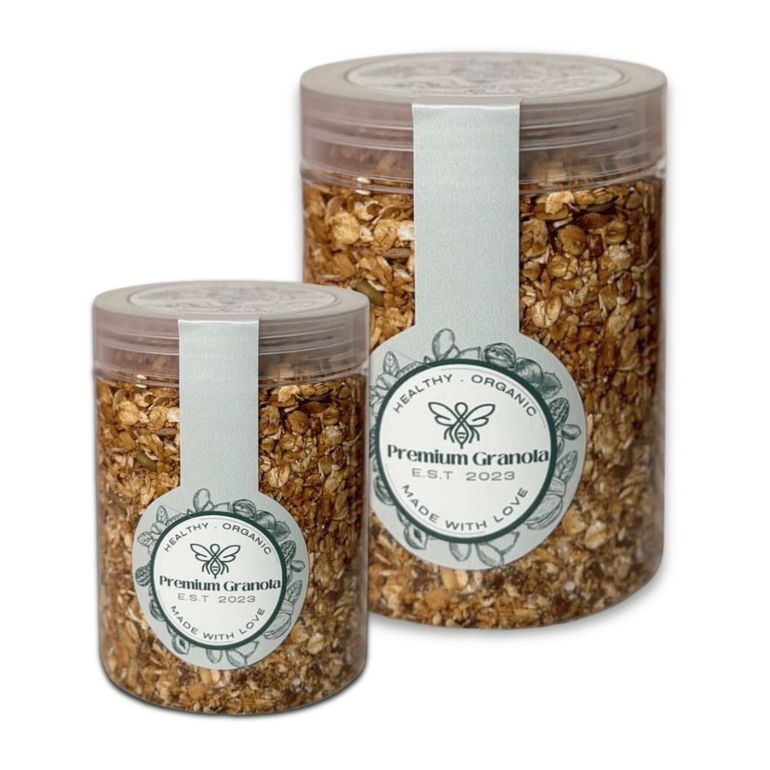
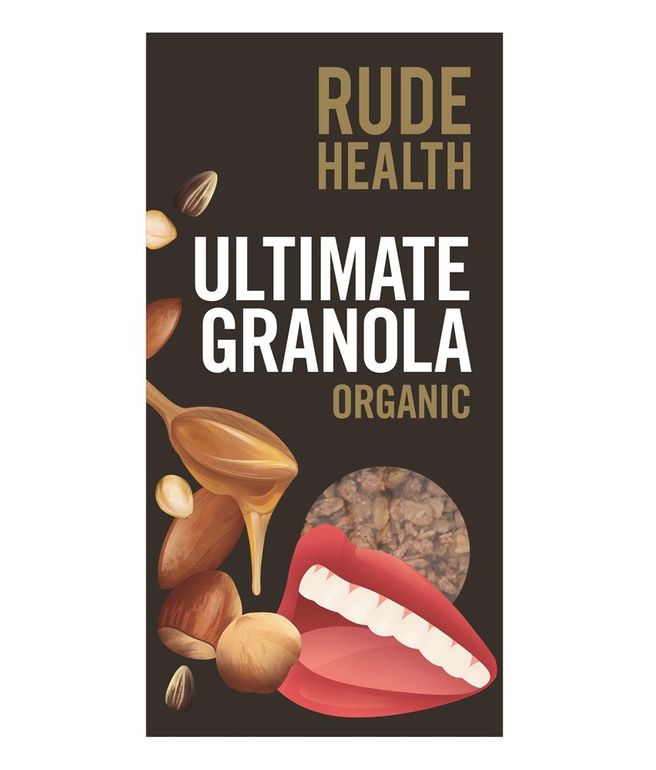
Per 40 g serving | Rude Health Ultimate (organic) | Premium Classic granola |
|---|---|---|
Calories | 186 | 190 |
Sugars | 5.2 g | 5 g |
Fibre | 3.0 g | 4 g |
Protein | 4.2 g | 5 g |
Saturated fat | 0.8 g | 5 g |
Sweetened with | Honey and date syrup | Cane sugar |
Main fat source | Sunflower oil and nuts | Coconut oil and nuts |
Calories are almost identical; saturated fat is not. The WHO (2023 update) advises keeping saturated fat below 10% of energy and replacing it with unsaturated fats where possible.
Sugar: the most important line on the label
The WHO counts honey, syrups and fruit juices as free sugars, just like white sugar, and recommends less than 10% of energy from free sugars, ideally under 5%. On a 2,000 kcal diet that is about 50 g a day, or 25 g for the stricter target. One serving of the granolas above has about 5 g, which is reasonable; the problem starts when the real portion is two or three times bigger, or the granola is chocolate-coated. An NHS hospital trust leaflet on breakfast cereals for healthy eating lists only "low sugar" granolas.
Reading the per-100 g column
NHS traffic-light thresholds per 100 g: sugars low at 5 g or less, high above 22.5 g; fat low at 3 g or less, high above 17.5 g; saturates low at 1.5 g or less, high above 5 g; salt low at 0.3 g or less, high above 1.5 g. Granola is rarely low in fat because of nuts and oil, so focus on sugar (ideally near 10 g or less) and saturates (under 5 g).
Fibre and whole grains
The WHO advises that carbohydrates come mainly from whole grains, vegetables, fruit and pulses, and that adults get at least 25 g of naturally occurring fibre a day. A serving of granola gives 3–4 g. Oats contain beta-glucan; the US FDA allows a heart-health claim when a diet low in saturated fat and cholesterol provides 3 g of beta-glucan a day. Granola has less oat per gram than plain oats, so don't rely on it alone. More in our guide to soluble fibre and cholesterol.
Tip: Weigh your portion once on a kitchen scale and remember how it looks in the bowl. Most people pour far more than 40 g without noticing.
How to choose
- Check the first three ingredients: oats or whole grains should come first, not sugar or syrup.
- Count the sweeteners: some products split sugar across several names.
- Look at the fat: coconut oil and butter raise saturated fat; sunflower or rapeseed oil and nuts add more unsaturated fat.
- Compare fibre: 6 g or more per 100 g is good.
- Watch extras: chocolate chunks, yoghurt coatings and sweetened dried fruit add sugar.
- Allergies and gluten: many granolas contain nuts, and some contain wheat, barley or spelt.
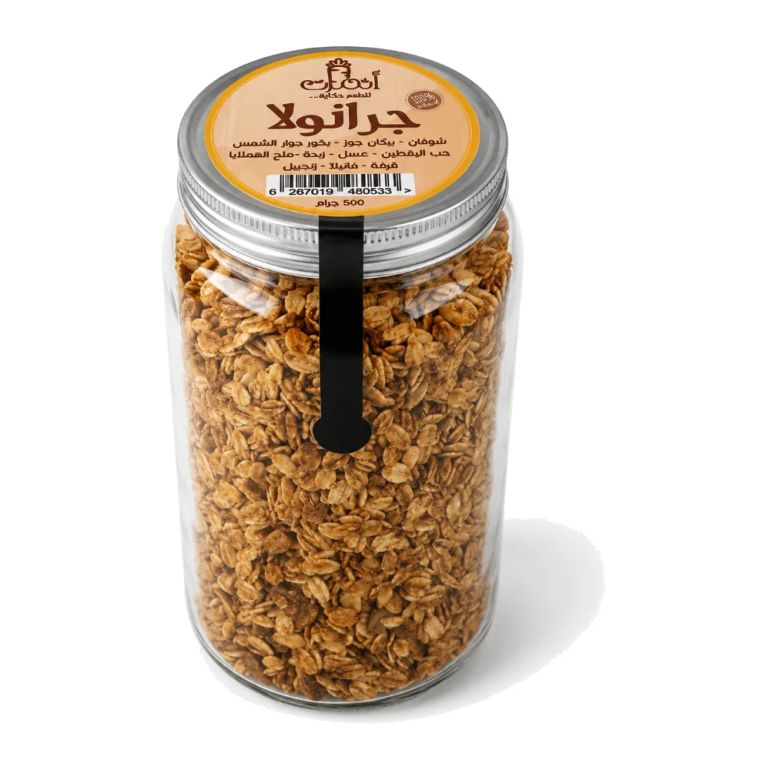
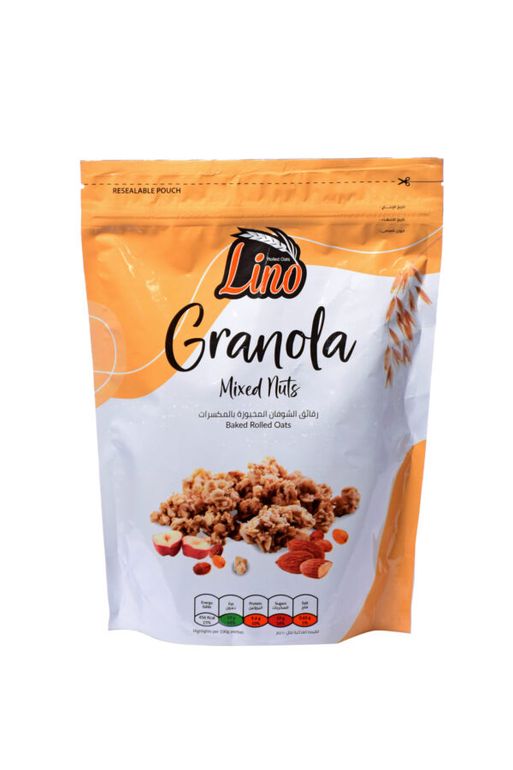
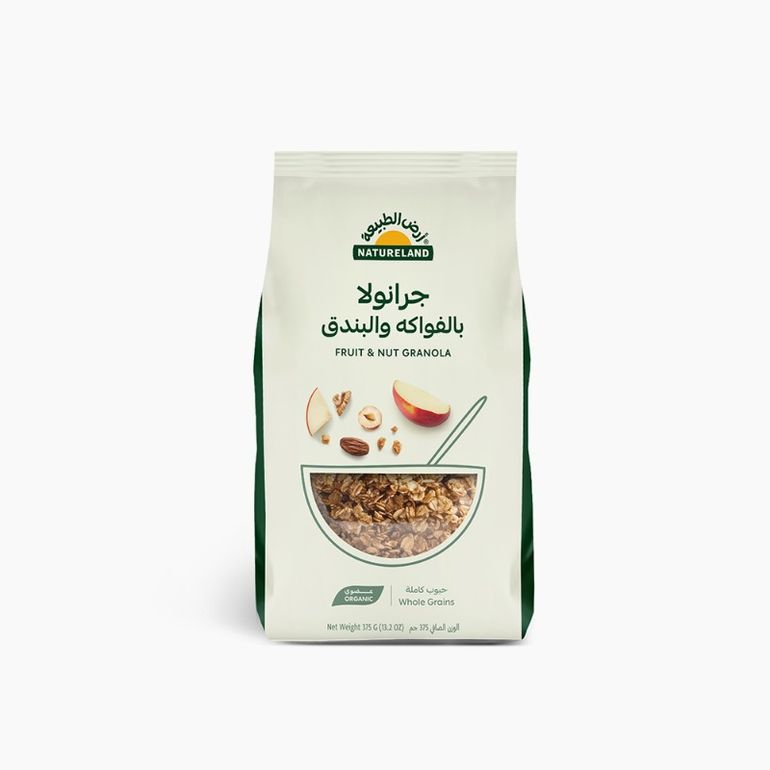
From our range: Rude Health Ultimate organic granola is very low in salt and saturated fat but contains spelt and barley; Premium Classic oat granola has 4 g fibre per serving, with coconut oil raising its saturates; Athmarat crunchy oat granola is a local option made with honey, butter, pecans and walnuts; and Lino granola with nuts is a family-size option (check the pack for nutrition values). Browse all types in Oats and Breakfast Cereals.
Making granola part of a balanced breakfast
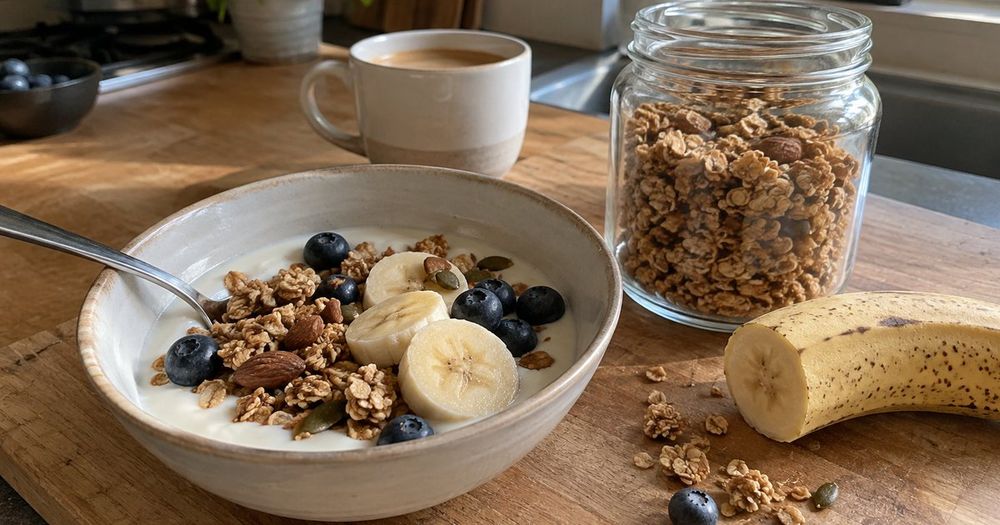
- Sprinkle 2–3 tablespoons over plain yoghurt with berries or banana.
- Mix half granola with half plain oats or unsweetened muesli.
- Choose unsweetened milk or plant milk.
- Scatter some over peanut butter and banana toast; see our peanut butter breakfast guide.
- At home, halve the honey and lean on cinnamon, vanilla and a little mashed date.
Note: Honey-sweetened granola is not for babies under 12 months, and whole nuts are not for children under 5 because of choking risk (NHS). People with diabetes or on a low-carb diet should count it as part of the meal's carbohydrate and ask a dietitian.
Storage
Keep it sealed in an airtight jar, somewhere cool and dry. Nuts and oils can go rancid; if it smells or tastes bitter, throw it away even before the date.
FAQ
Does granola help with weight loss?
No single food does. At about 465–475 kcal per 100 g, granola helps as a small portion alongside protein and fruit, and works against you in large amounts.
Is honey-sweetened better than sugar-sweetened?
Not much: the WHO counts honey and syrups as free sugars. Total sugars on the label matter most.
Is granola gluten-free?
Not always. Some contain wheat, barley or spelt, and oats can be contaminated. People with coeliac disease should choose products clearly labelled gluten-free.
What is a sensible portion?
Most labels use 40 g. As a yoghurt topping, 20–30 g is enough.
References
- WHO (2023). WHO updates guidelines on fats and carbohydrates. who.int
- WHO (2015). Guideline: Sugars intake for adults and children. who.int
- NHS. How to read food labels. nhs.uk
- University Hospitals Plymouth NHS Trust (2020). Breakfast Cereals for Healthy Eating. plymouthhospitals.nhs.uk
- FDA. 21 CFR 101.81: Soluble fiber from certain foods and risk of coronary heart disease. ecfr.gov
- NHS. Foods to avoid giving babies and young children. nhs.uk
This article is for general education and does not replace advice from your doctor.