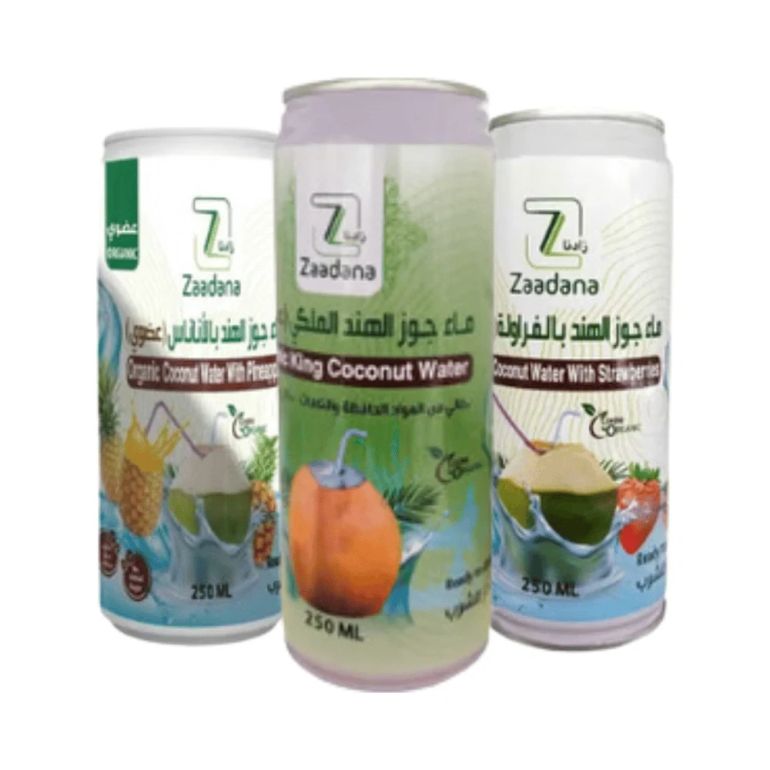

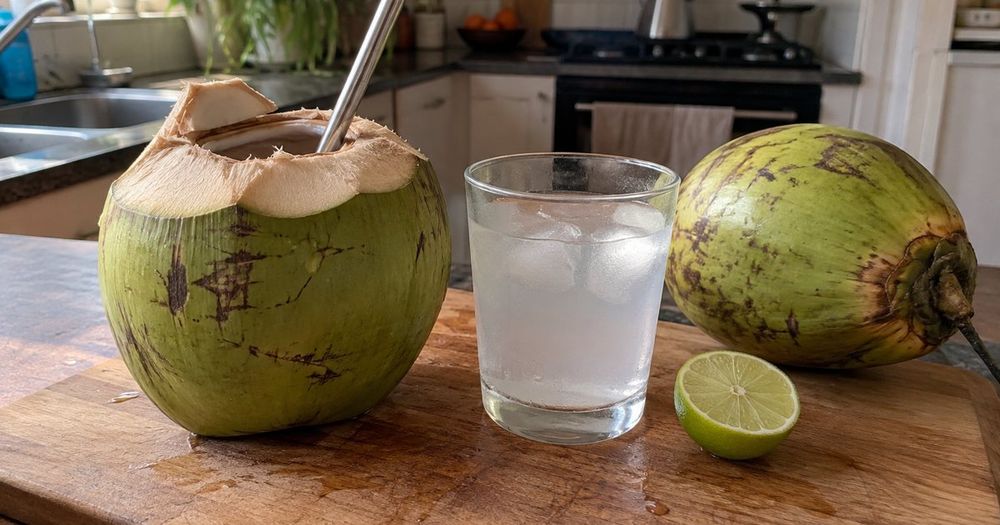
Coconut water is the clear liquid inside young green coconuts. It is naturally rich in potassium and fairly low in calories, but it is not a miracle drink, it does not replace oral rehydration solution during diarrhoea, and it is not right for everyone in the same amount. Here is what is in the can, what the research says about rehydration, and who should be careful.
In short: A 330 ml can of coconut water has roughly 55–80 kcal, 13–19 g of natural sugar and 330–600 mg of potassium, depending on the brand. In a small trial of 12 trained men it rehydrated about as well as water or a sports drink after exercise in the heat, with more bloating for some. It is a refreshing swap for juice or soda, but water is enough most days. People with kidney disease or on potassium-raising medicines should ask their doctor before drinking it daily.
What is coconut water, and why do labels differ?
Coconut water is not coconut milk. The water is the natural liquid inside the young fruit; the milk is made by pressing the white flesh, so it is much higher in fat. A 2012 review in the journal Fruits describes coconut water as only 2–5% solids, mostly sugars and minerals, with potassium as the main mineral and an osmolarity close to body fluids (about 300 mOsm/L). Its composition changes with fruit maturity, variety and growing conditions: ripe fruit holds about 2–3.5% sugar, and some varieties carry 1.5 times more potassium than others. That is why brands show different numbers, so read the label on the can you buy.
Calories, sugar and potassium compared
Per ~330 ml | kcal | Sugar (g) | Potassium (mg) | Sodium (mg) |
|---|---|---|---|---|
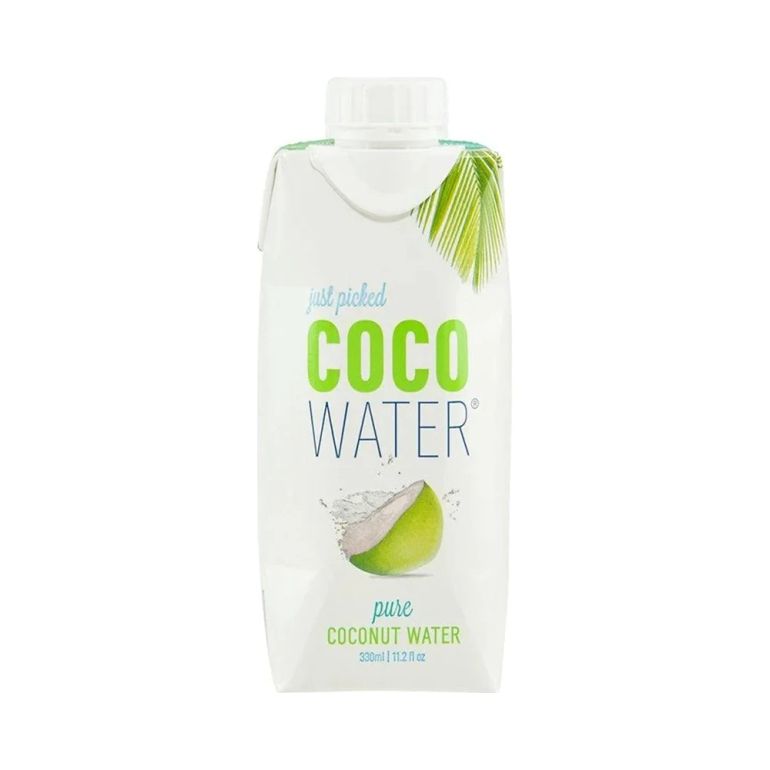
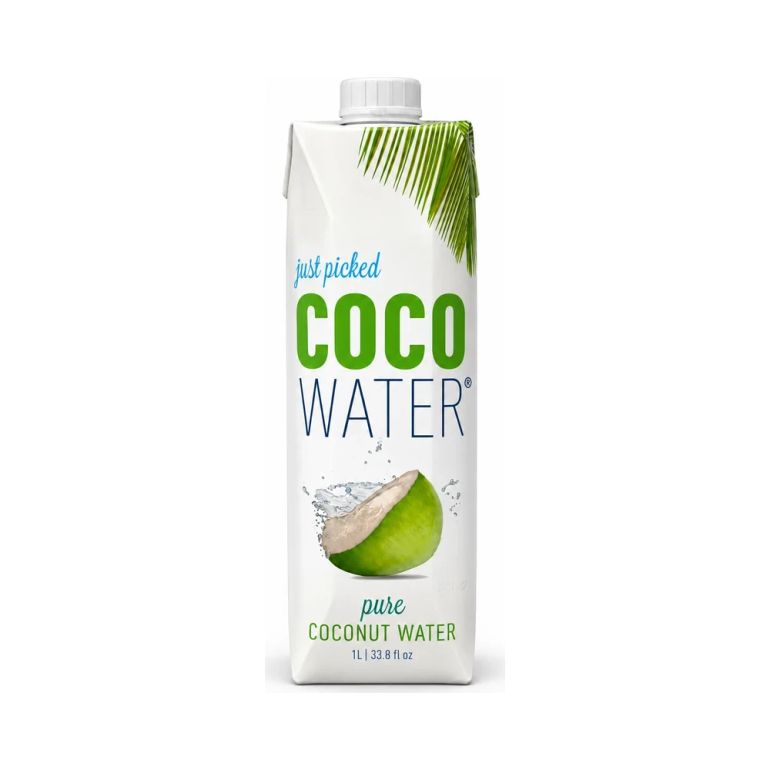
Just Picked coconut water (label) | 56 | 12.8 | 595 | 92 |
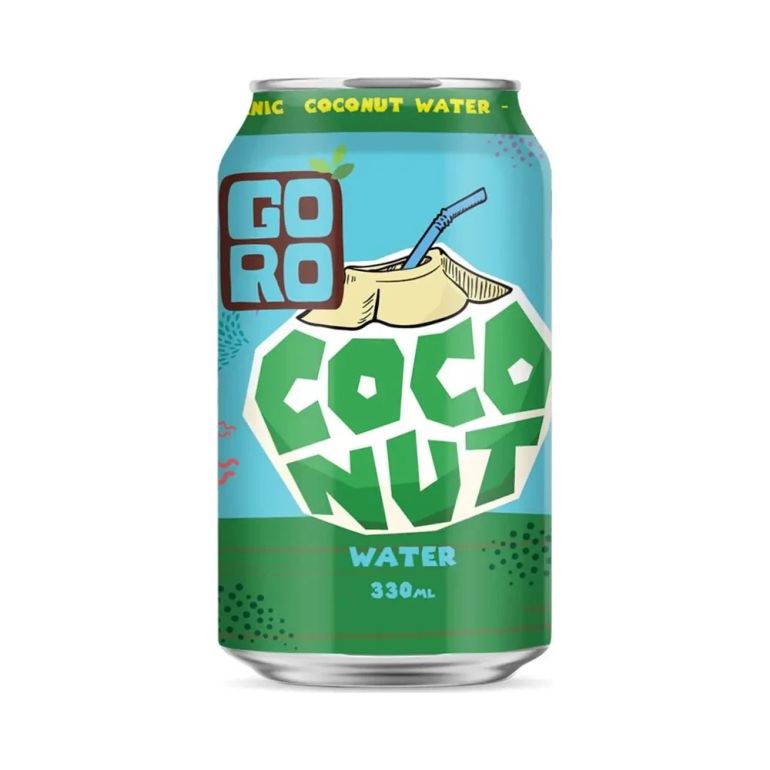
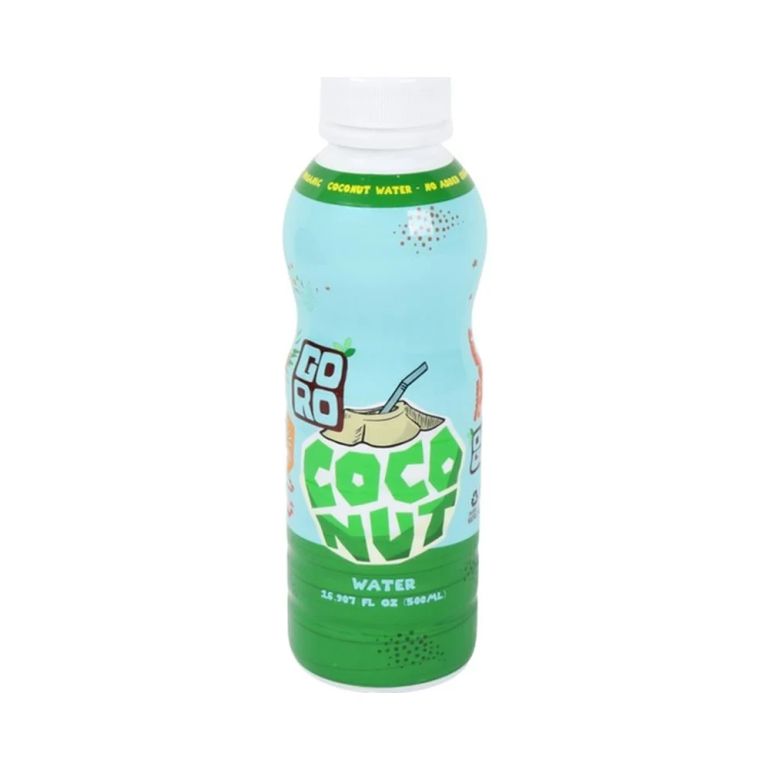
GORO organic coconut water (label) | 80 | 19 | 330 | 125 |
Fresh coconut water (USDA) | ~63 | ~8.6 | ~825 | ~347 |
WHO oral rehydration solution | ~18 | ~4.5 (glucose) | ~258 | ~569 |
Drinking water | 0 | 0 | 0 | very low |
Two things stand out: brands differ a lot, and coconut water is high in potassium but low in sodium, the opposite of a medical rehydration solution.
Does it hydrate better than water or a sports drink?
In a 2012 crossover study (Kalman et al.), 12 trained men exercised for an hour at about 36 °C, losing around 2% of body weight, then drank bottled water, pure coconut water, coconut water from concentrate or a carbohydrate-electrolyte sports drink. All four drinks restored hydration similarly and performance afterwards did not differ. Coconut water from concentrate kept slightly more fluid than plain water only. Participants reported more bloating and stomach upset with coconut water, which the authors linked to drinking over two litres within an hour. Their own conclusion: all the drinks supported rehydration, with little difference in young healthy men. The study is small and the dehydration was mild, so it does not show coconut water is better than water.
The American College of Sports Medicine notes that sweat mainly costs you sodium, with far less potassium. For very long sessions or heavy sweating in the heat, you need more sodium than coconut water provides. Our guide to hydration products and when you need electrolytes explains the numbers.
Tip: For workouts under an hour, water is enough. If you enjoy coconut water after exercise or on a hot day, sip one cold can slowly rather than downing litres, and keep the rest of your fluids as water.
Diarrhoea: it does not replace ORS
With diarrhoea or vomiting, especially in children and older adults, the real risk is losing water and sodium. The WHO relies on oral rehydration solution because its sodium and glucose balance helps the gut absorb water. Coconut water has far less sodium and more sugar, so use ORS from the pharmacy and see a doctor if a child passes little urine, is drowsy, or the diarrhoea continues.
Potassium: useful for most, risky for some
The WHO recommends adults get at least 3,510 mg of potassium a day from food to help lower blood pressure, and the NHS says adults need about 3,500 mg. A can of coconut water can add a useful share, like bananas, pulses and vegetables. But weak kidneys cannot clear excess potassium. A 2018 case report described a 78-year-old man with diabetes, heart failure and undiagnosed kidney disease, taking losartan and spironolactone, who drank 2–4 servings of coconut water a day for a week and developed dangerous hyperkalaemia with temporary paralysis. It is one case with several causes, but a useful reminder.
Note: If you have chronic kidney disease, take ACE inhibitors, angiotensin receptor blockers, potassium-sparing diuretics or potassium supplements, ask your doctor before making coconut water a daily habit. Cleveland Clinic also advises caution with blood pressure medicines and notes there is little research in pregnancy.
Blood pressure and weight
There is no strong evidence that coconut water itself lowers blood pressure; what is established is that a diet rich in potassium and low in salt helps (WHO). For more on drinks and blood pressure, see what research says about hibiscus tea and blood pressure. It is not a weight-loss drink either: it has fewer calories than most juices and regular soft drinks, so swapping can help, but adding it on top of your usual diet adds calories.
Sugar: natural, but it counts
A 330 ml can holds about 13–19 g of sugar, roughly 3–5 teaspoons. It is naturally present, not added, but it comes as liquid sugar without fibre. The WHO advises keeping free sugars below 10% of daily energy (about 50 g on 2,000 kcal), ideally below 5%. Its definition names juices, honey and syrups, not coconut water, but treating it as a sweet drink is the cautious approach: about one can a day, not a replacement for water. People with diabetes should count it as carbohydrate.
How to choose
- Ingredients: ideally "100% coconut water" only, with no added sugar or flavourings.
- Compare sugar per can; brands can differ by 6 g.
- If you watch potassium for health reasons, read the label rather than general figures.
- "Organic" is about farming, not lower sugar.
- Small cans (250–330 ml) help keep portions sensible.
At Green Spot you can find Just Picked Vietnamese coconut water 330 ml, GORO organic coconut water in a can, and the full coconut water range. Once opened, keep it in the fridge and drink within 24–48 hours.
FAQ
Is coconut water better than water?
No. It hydrated about as well as water in studies, but adds sugar and calories. Water remains the main drink.
How much can I drink a day?
There is no official limit. One can (250–330 ml) a day is reasonable for most healthy adults because of the sugar. People with kidney disease or on potassium-raising medicines should ask their doctor.
Is it suitable for children with diarrhoea?
It does not replace oral rehydration solution. Use ORS and see a doctor.
References
- Kalman DS, et al. J Int Soc Sports Nutr. 2012;9:1. doi:10.1186/1550-2783-9-1. PMC3293068
- Prades A, et al. Coconut water uses, composition and properties: a review. Fruits. 2012;67(2):87–107. doi:10.1051/fruits/2012002. Cambridge Core
- USDA – Nuts, coconut water (liquid from coconuts), 1 cup (via University Hospitals). Link
- Hemachandra KHDT, et al. Case Rep Neurol Med. 2018;2018:6360381. doi:10.1155/2018/6360381. PMC5996444
- Sawka MN, et al. ACSM position stand: Exercise and fluid replacement. Med Sci Sports Exerc. 2007. PubMed 17277604
- WHO. Guideline: Potassium intake for adults and children (2012). WHO
- WHO. Guideline: Sugars intake for adults and children (2015). WHO
- WHO. Diarrhoeal disease fact sheet. WHO
- NHS. Vitamins and minerals – Others (Potassium). NHS
- Cleveland Clinic. The Health Benefits of Coconut Water (2021). Cleveland Clinic
This article is for general education and does not replace advice from your doctor.