
In short: If you love crunchy salty snacks, there are plenty of chip alternatives that differ in fiber, protein and calories. Home-popped popcorn is a light whole grain (3 cups have about 93 calories), unsalted nuts offer healthy fats and protein, and lentil or chickpea chips give a little more protein but can be close to chips in calories. It also helps to know about "acrylamide", a compound that forms when starchy foods are fried or roasted until brown, and how you cook affects how much forms.
In our article on kettle chips and reading the label, we explained that chips are fine in moderation and that the secret is portion size and salt. This article completes the picture: which salty alternatives give you the same crunch with more benefit? And what is the acrylamide story that keeps coming up in the news about fried potatoes?
What is acrylamide, and why is it linked to chips?
Acrylamide is a chemical that forms naturally in starchy foods cooked at high temperatures, such as frying, roasting and baking. It comes from a reaction between natural sugars and an amino acid called asparagine found in potatoes and grains, the same reaction that browns food and gives it a toasted flavor. It was only discovered in food in 2002, but it has most likely been there for as long as people have cooked.
The European Food Safety Authority (EFSA) reviewed the evidence in 2015 and concluded that acrylamide in food potentially increases cancer risk for all age groups, based on animal studies. It also made clear that evidence from human studies is limited and inconclusive. It noted that the biggest sources for adults are fried and roasted potato products, followed by coffee, then bread and biscuits. Children are the most exposed relative to body weight.
The practical takeaway: there is no need to panic over a bag of chips, but it makes sense to reduce exposure where you can, especially since the same advice benefits your health in general.
Tip: At home, cook potatoes to a light golden color rather than dark brown. The US FDA notes that brown areas tend to contain more acrylamide.
FDA tips to reduce acrylamide at home
- Frying forms the most acrylamide in potatoes: followed by roasting potato pieces, then baking whole potatoes. Boiling potatoes, or microwaving them whole with the skin on, does not form acrylamide.
- Soak raw potato slices in water for 15 to 30 minutes before frying or roasting, then dry them well before cooking.
- Don't store potatoes in the fridge if you plan to fry or roast them, because cold raises their sugars and increases acrylamide during cooking. Keep them in a cool, dark place.
- Toast bread to a light golden color rather than dark brown.
And the FDA's own best advice for consumers: a balanced diet with vegetables, fruit and whole grains, and fewer fried foods, which reduces acrylamide, fat and salt together.
Salty chip alternatives: a quick comparison
These are approximate figures to help you compare; they vary by product and preparation, so always check the label:
Snack | Approximate serving | Calories | What stands out |
|---|---|---|---|
Fried potato chips | 28 g (a handful) | About 150 | Taste and crunch, but little fiber or protein |
Air-popped popcorn | 3 cups (24 g) | About 93 | Whole grain, about 3.5 g fiber, big volume for few calories |
Buttered microwave popcorn | 3 cups | Much higher | Often has added oils and salt; check the label |
Unsalted nuts | 30 g (a small handful) | 170 to 200 | Unsaturated fats, protein and fiber; more filling |
Lentil or chickpea chips | 28 g | Close to chips | A little more protein and fiber depending on product |
Popcorn: the lightest option
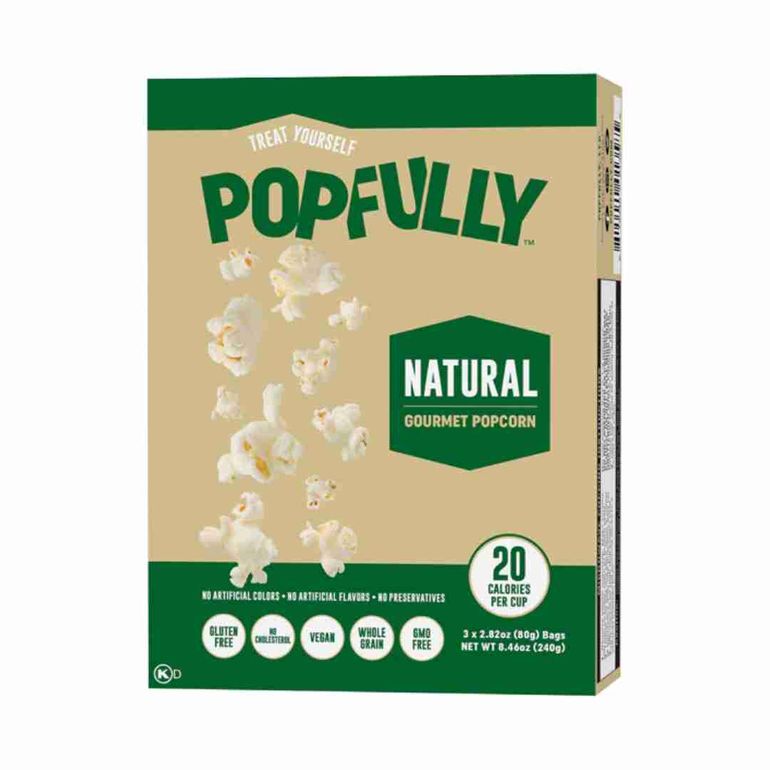
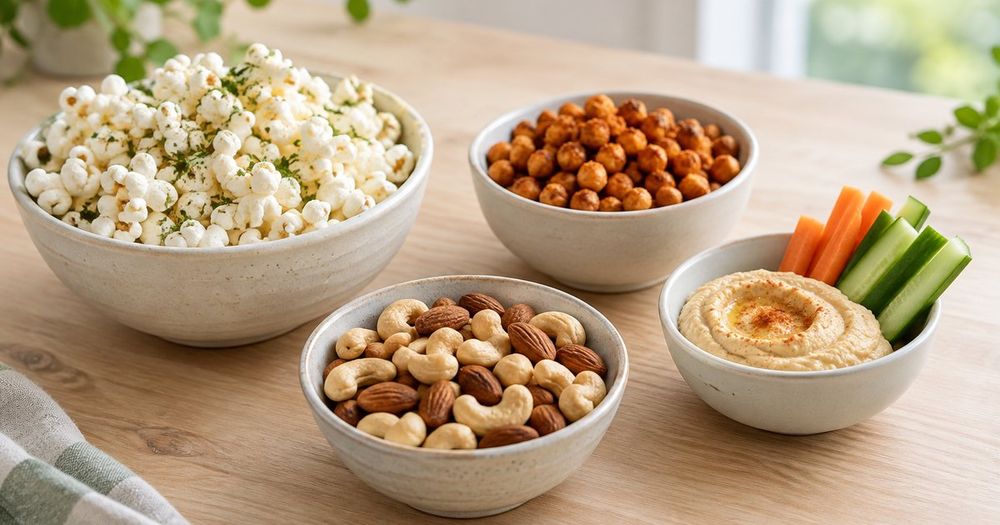
Popcorn is a whole grain, and a 3-cup serving of air-popped popcorn has about 93 calories and 3.5 g of fiber, according to USDA data. Its advantage is "big volume, few calories": you fill a whole bowl with fewer calories than a handful of chips. But the picture changes with butter, oil and added salt, and cinema popcorn in particular can be very high in calories.
An easy home method: popcorn kernels in a pot with a teaspoon of olive or avocado oil over medium heat with a lid, then a light pinch of salt, paprika, za'atar or a little grated parmesan.
Note: Popcorn is a choking hazard for young children and is not recommended for children under about 4 years old.
Unsalted nuts: more filling
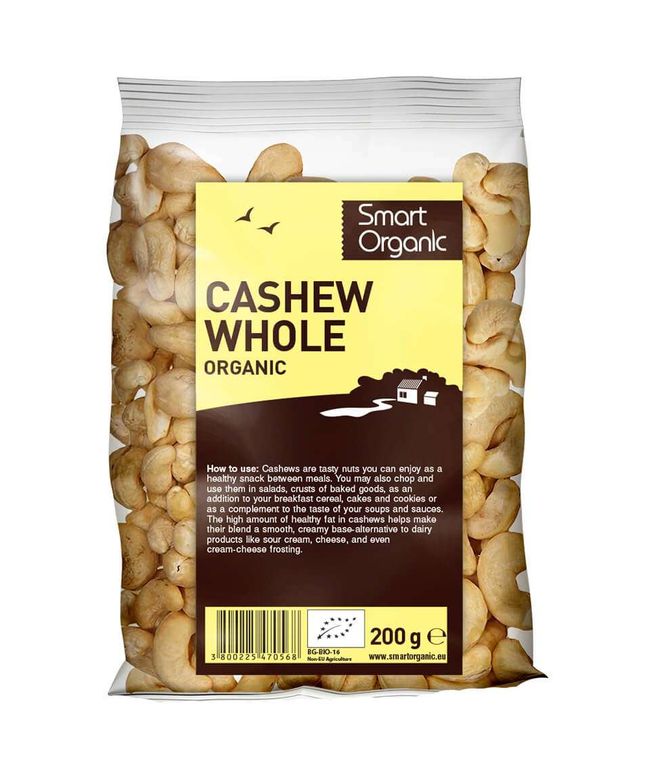
Nuts are calorie-dense, but most of their fat is unsaturated, and their protein and fiber make them more filling than chips. A small handful (about 30 g) is enough. Choose unsalted or lightly salted versions, and skip sugar- or chocolate-coated nuts if you want a light salty snack.
Legume chips: a good idea, but read the label
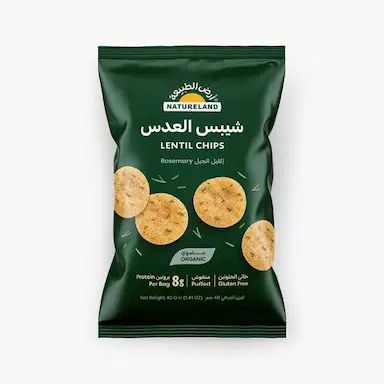
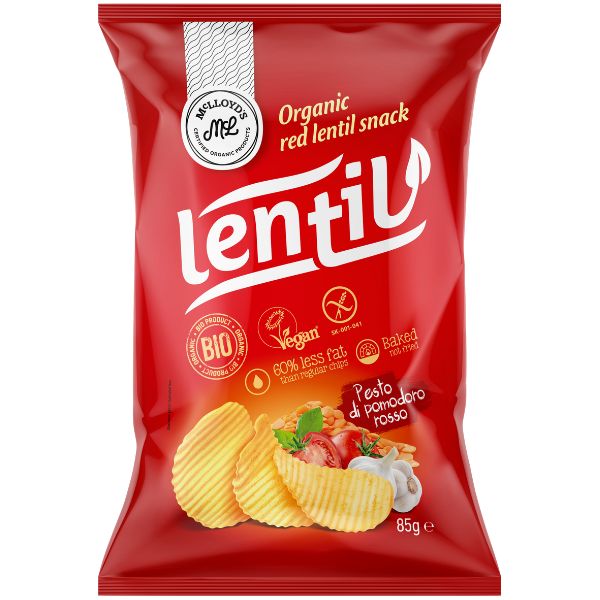
Lentil and chickpea chips sound healthy because they are made from legumes, and they often have a little more protein and fiber than potato chips. But many are made from legume flour and fried or oiled, so their calories can be close to regular chips. Their real advantage is variety, not being "calorie-free". Compare fiber, protein and salt per 100 g.
Other home-made options
- Oven-roasted chickpeas: boiled chickpeas, dried well, with a spoon of oil and spices, roasted until crunchy.
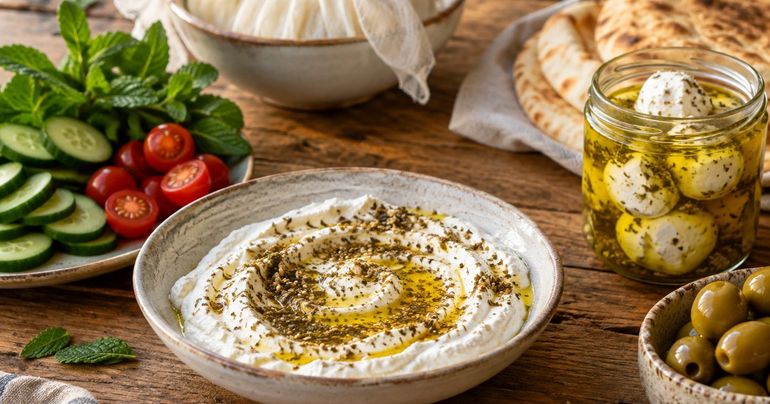
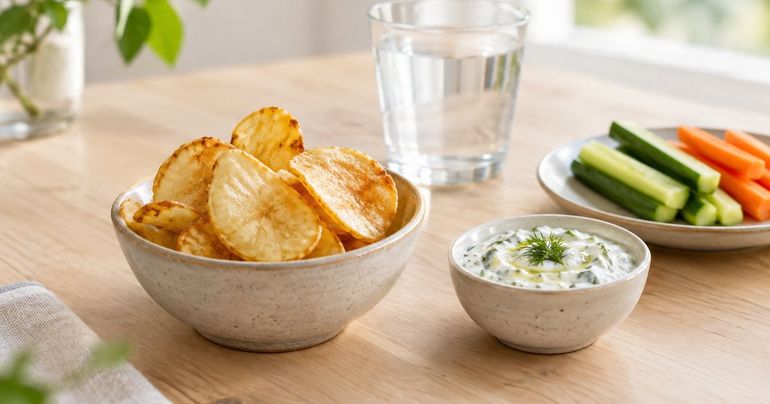
- Vegetables with a dip: carrots, cucumber and peppers with hummus or labneh, natural crunch with fiber.
- Toasted pita or tortilla wedges: cut, brushed lightly with olive oil and za'atar, and baked to a light golden color.
What about cheese and pesto flavors?
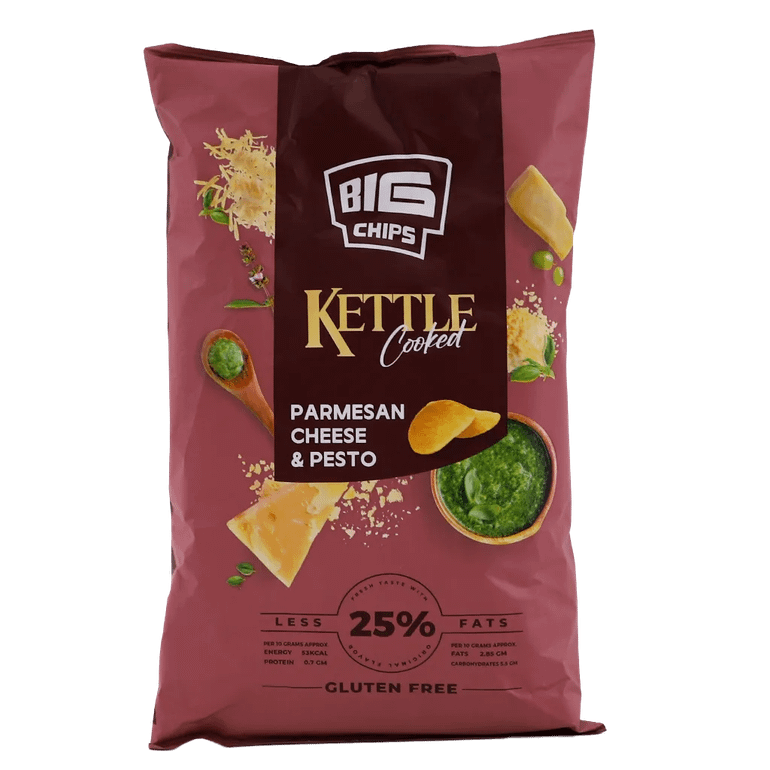
Flavors like "parmesan and pesto" or "cheese" are tasty, but they are seasoning powders added to chips and may contain cheese or milk powder, sometimes more salt than plain, and flavor enhancers. They don't give you the benefit of real cheese or basil. If it's the flavor you love, try popcorn with a sprinkle of real grated parmesan and dried basil for a similar taste with more fiber.
If you avoid milk or have a milk allergy, read the ingredient list carefully in every flavor, because milk derivatives are common in cheese and cream flavors.
How to build a balanced salty snack
A simple idea: put something crunchy, something with protein and something with fiber on your snack plate. For example, two cups of popcorn with a small handful of almonds and cucumber sticks, or a handful of lentil chips with two spoons of hummus and carrots. That way you get the crunch and the salty taste, stay full longer, and don't find yourself opening a second bag half an hour later.
Frequently asked questions
Is the acrylamide in chips dangerous?
EFSA considers that it may increase cancer risk based on animal studies, but human evidence is inconclusive. The sensible approach is to cut down on heavily fried and roasted foods, not to fear a small portion.
Is popcorn better than chips?
Air-popped or lightly oil-popped popcorn has fewer calories and more fiber for the same volume. Ready-made buttered popcorn can change that picture, so read the label.
Are lentil chips healthy?
They usually have a little more protein and fiber than potato chips, but their calories can be similar. They are a good option for variety, with attention to portion size.
How many handfuls of nuts a day?
A small handful (about 30 g) is a suitable portion for most people, preferably unsalted.
References
- EFSA (2015). Acrylamide – topic page and 2015 Scientific Opinion.
- U.S. FDA. Acrylamide and Diet, Food Storage, and Food Preparation.
- U.S. FDA. Acrylamide Questions and Answers.
- USDA Agricultural Research Service (2021). Popcorn: A Healthy Whole Grain Snack.
- CDC. Choking Hazards.
This article is for general education and does not replace advice from a doctor or dietitian.