
Many parents ask: when should I start giving my child snacks, and what is safe? The answer depends on age. Babies under one usually do not need snacks at all, and after the first birthday a snack becomes an important small meal between meals. This guide explains when your child needs snacks, how to choose snacks that are safe from choking, and what to read on the label.
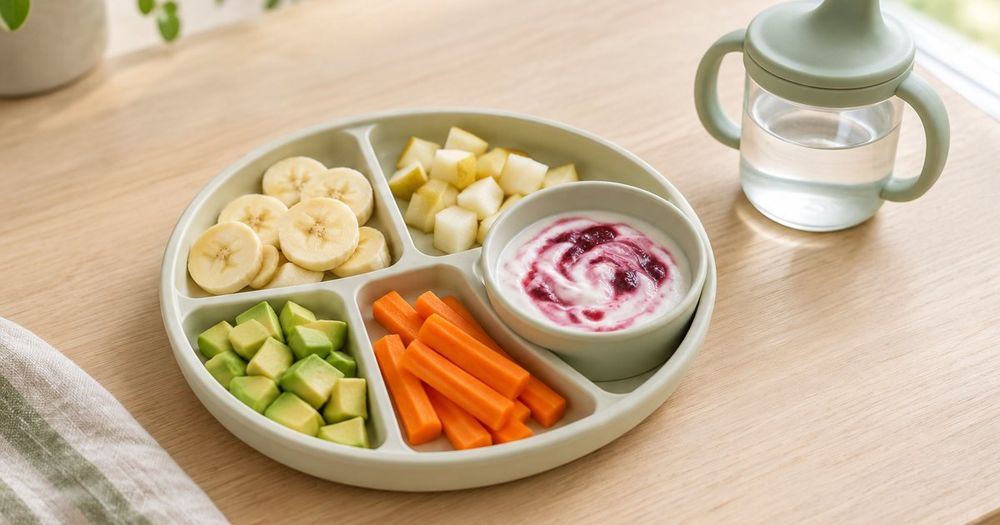
In short: according to the NHS, babies under 12 months do not need snacks, and if they seem hungry between meals you can offer an extra milk feed. From one year, children eat 3 meals and about 2 healthy snacks a day. A good snack is a small meal: soft fruit cut small, cooked vegetables, plain yogurt or pulses. Avoid hard, small and round foods such as whole nuts, popcorn and uncut grapes, and avoid added sugar and salt. Keep your child seated and stay with them while they eat.
Do babies need snacks?
According to the NHS, babies under 12 months do not need snacks. At this age, milk (breast milk or first infant formula) is the main source of nutrition, and solid food is about getting used to tastes and textures. If you think your baby is hungry between meals, the NHS suggests offering an extra milk feed instead of a snack.
Toward the first birthday, babies gradually move to three meals a day and their milk intake falls little by little. This is when snacks start to play a role. Do not worry if your child eats small amounts at first, as this is normal in the early months of solids, and what matters is getting used to different foods and textures.
After one year: how many snacks, and when?
Young children have small stomachs and cannot eat a lot in one meal, so they need regular food. The common recommendation in UK guidance for children aged 1 to 5 is 3 meals and about 2 healthy snacks a day. First Steps Nutrition Trust suggests thinking of snacks as "mini meals", not sweets or rewards.
- Timing: well between meals, so your child is hungry at mealtimes.
- Portion: small, roughly the size of your child's hand.
- Place: seated at the table or in a high chair, not while walking or playing.
Tip: use snacks to add something missing from your child's day. First Steps Nutrition Trust suggests including sources of iron and zinc at snack time, such as eggs, pulses, or smooth nut butter mixed into food.
Safety first: avoid choking hazards
Choking is one of the biggest risks for young children, and small, round, hard or sticky foods are the most dangerous. According to the US Centers for Disease Control and Prevention (CDC) and the NHS, these are examples of choking hazards:
Type | Risky examples | Safer option |
|---|---|---|
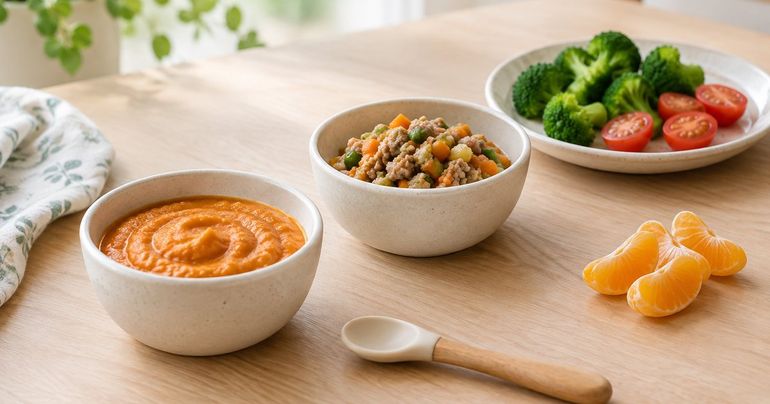
Fruit and vegetables | Uncut grapes and cherry tomatoes, hard raw carrot and apple, raisins | Cut them very small, and cook hard vegetables until soft |
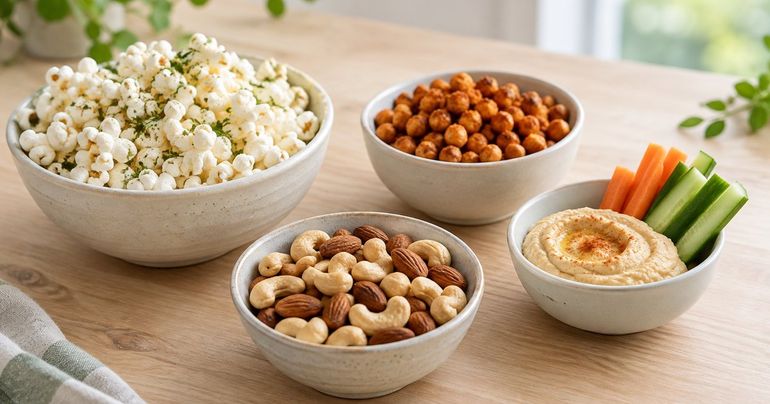
Protein | Whole nuts and seeds, spoonfuls of peanut butter on their own, large chunks of meat, sausages, large chunks of cheese | Ground nuts or smooth nut butter mixed into food, minced meat or small soft pieces |
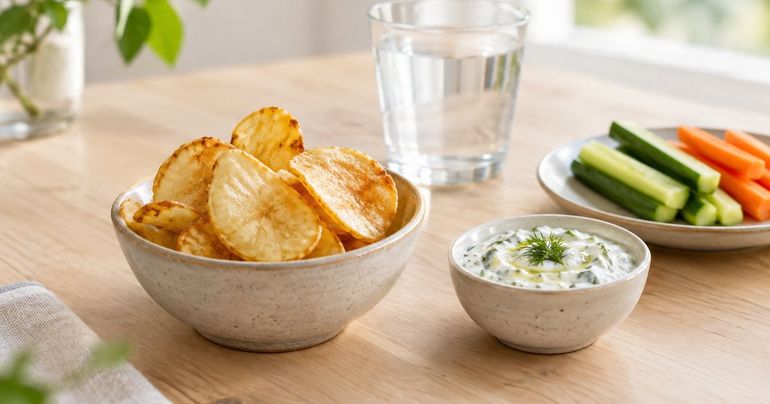
Grains and snacks | Popcorn, crisps, hard biscuits, granola bars, bread with whole grain kernels | Soft bread, cooked oats |
Sweets | Hard sweets, chewing gum, jelly, marshmallows | Soft fruit cut small |
- Stay with your child the whole time they eat and watch what they put in their mouth (CDC).
- Keep them sitting upright, and do not let them eat lying down, walking or in a car seat.
- According to the NHS, whole nuts should not be given to children under 5; crush or grind them instead.
Sugar and salt: less is better
According to the NHS, sugary snacks can cause tooth decay, and you should not add sugar to baby food. Salt is hard on a baby's kidneys, so avoid salty foods such as crisps, salted crackers, sausages and ready meals. Honey should be avoided completely before 12 months because it can cause infant botulism.
For drinks, the NHS advises avoiding fruit juice and smoothies before one year; after that, if you offer juice, dilute it (1 part juice to 10 parts water) and serve it with a meal. Avoid fizzy drinks and flavoured milk. Water and milk are the best drinks for young children.
How to read a children's snack label
- Stated age: make sure it suits your child's age and current eating stage.
- No added sugar: check the ingredients list, not just the front. Sugar has many names: sugar, syrup, honey, molasses, juice concentrate.
- Low salt: compare sodium between products and choose the lower one.
- Few, clear ingredients: the simpler the list, the better.
- Allergens: such as milk, egg, wheat, sesame and nuts; introduce each new one in a small amount and watch for a reaction.
Note: "for kids" or "natural" on a pack does not mean it is sugar-free or suitable for every age. Always read the ingredients, and sweet purees are best offered from a spoon with a meal rather than throughout the day.
Snacks on the go
Outings are when parents reach for ready-made snacks most. Plan before you leave so you are not stuck with something sweet or salty:
- Pack a small box of soft fruit cut small, soft bread or cooked vegetable pieces.
- Bring water in a cup or a child-friendly bottle instead of juice.
- A ready puree with no added sugar is practical, ideally offered from a spoon.
- Do not feed your child in a car seat or stroller, because the CDC advises that children eat sitting upright while you watch them. Wait until you stop and can sit with them.
If your child stops eating their main meals, look at snack timing and size. Sometimes a snack that is too close to a meal or too large leaves them full, and the fix is to move it earlier or make it smaller.
Healthy snack ideas from one year
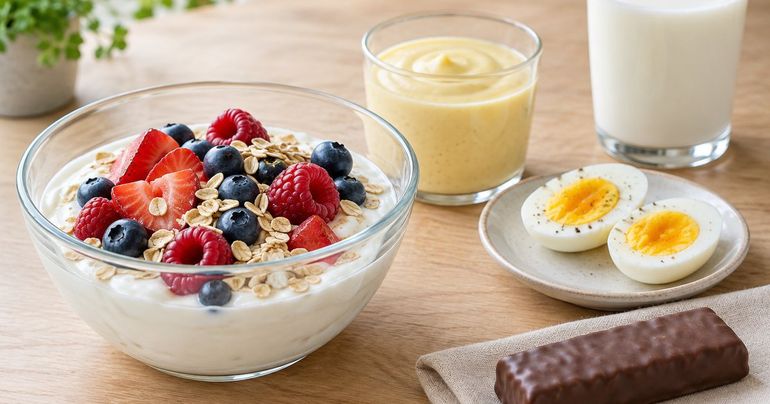
- Soft fruit cut small: banana, ripe pear, mango, and grapes cut into quarters.
- Soft cooked vegetables: carrot, courgette or sweet potato sticks cooked until soft.
- Plain full-fat yogurt: with mashed fruit instead of flavoured yogurt.
- Hummus with soft bread: a source of plant iron and protein.
- Chopped boiled egg: cooked until the yolk is set.
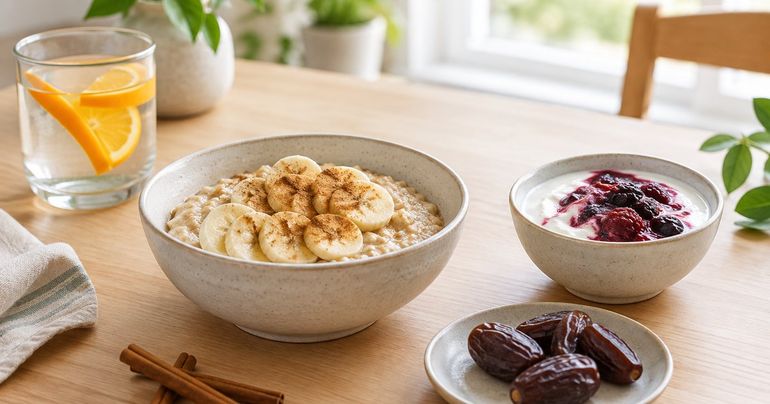
- Cooked oats or baby cereal: with milk and fruit.
- Soft cheese in small pieces: not large chunks.
What suits you from Green Spot?
Fresh home food is the foundation, and ready purees help on outings or as part of a meal. These options have no added sugar:
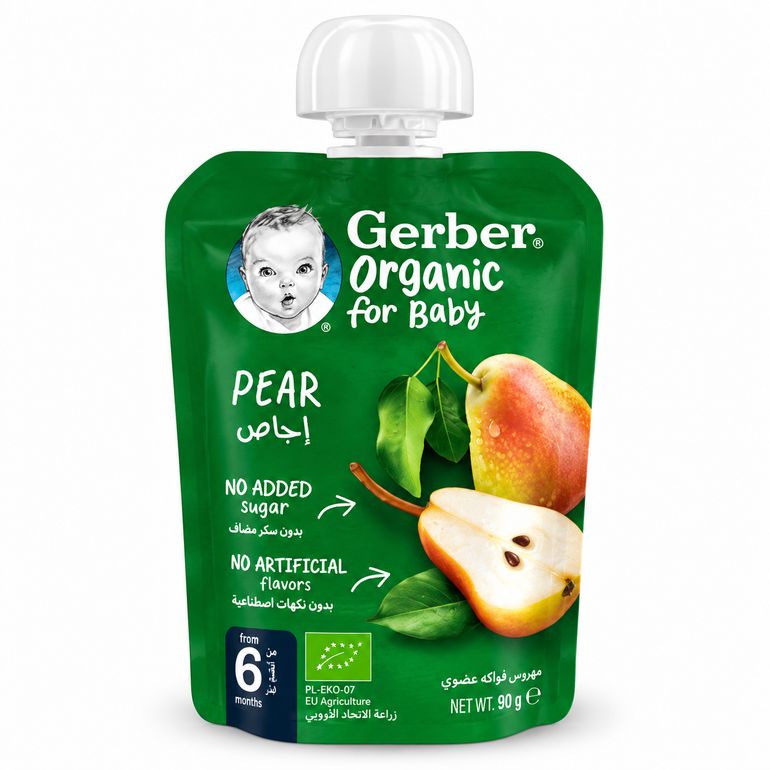
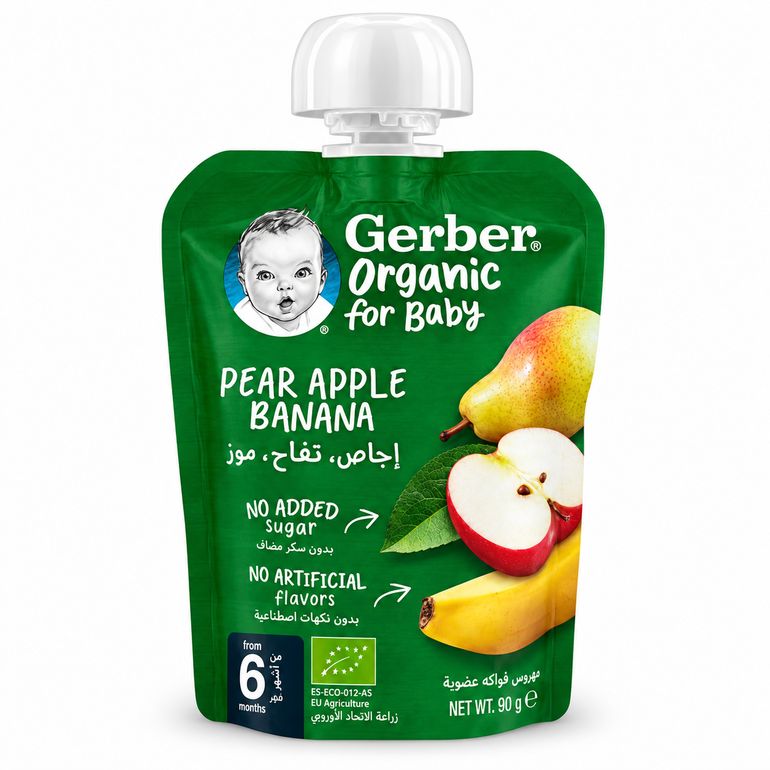
- Gerber organic pear puree, no added sugar, and Gerber pear, apple and banana puree.
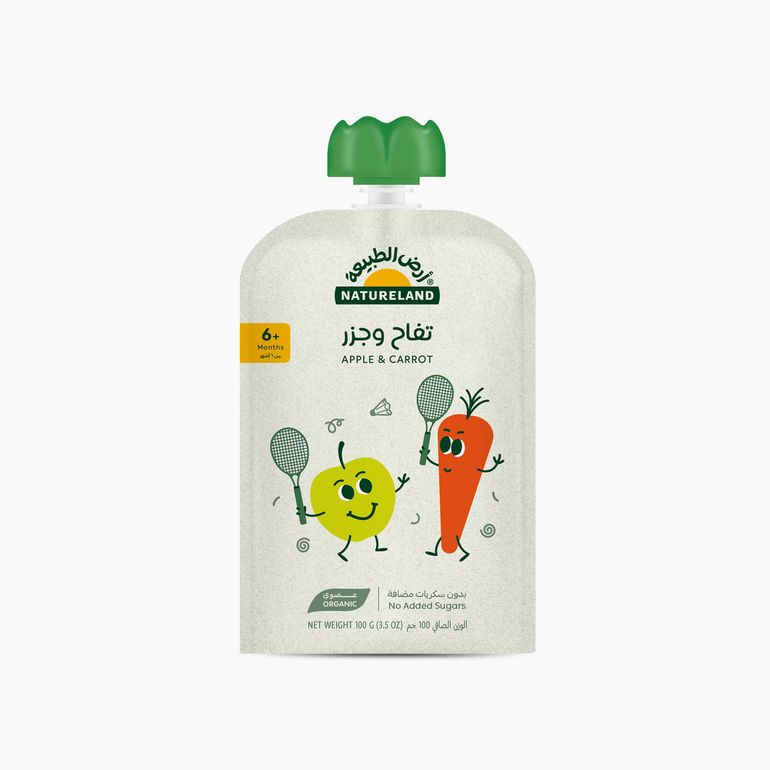
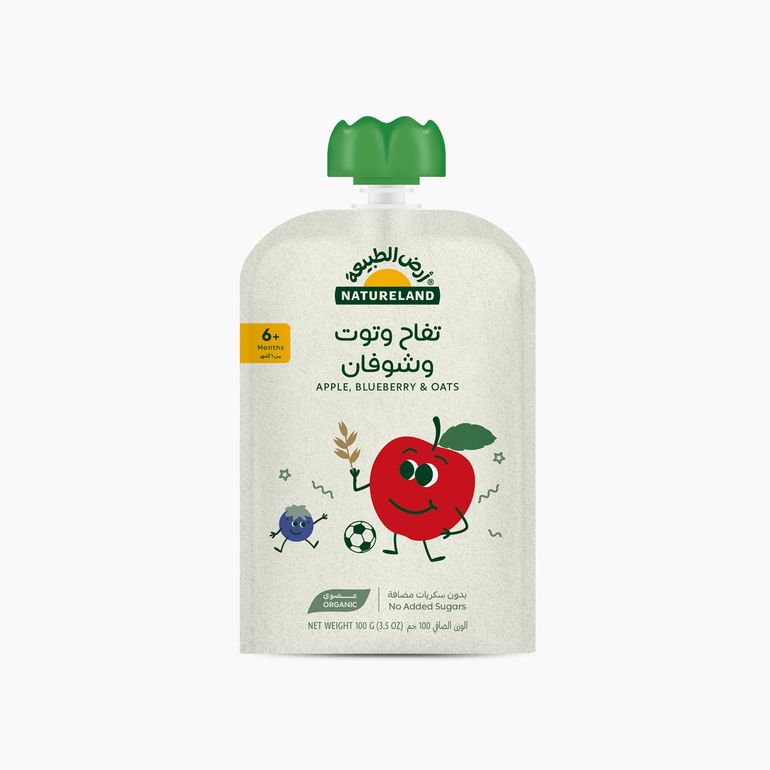
- Natureland organic apple and carrot puree, and Natureland apple, blueberry and oat puree.
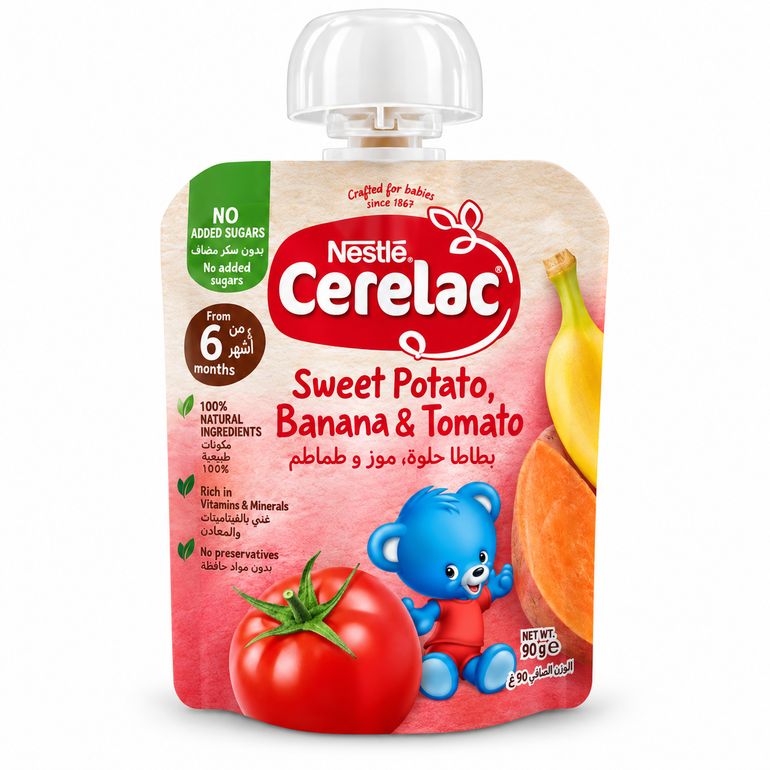
- Cerelac sweet potato, banana and tomato puree as an option with vegetables.
Check the age on each pack, and if your child has an allergy or a problem with swallowing or growth, ask your pediatrician before changing their diet.
Frequently asked questions
When should I start giving my child snacks?
Usually after one year, once they are eating 3 meals. Before one, if they are hungry between meals, offer extra milk (NHS).
Are rice cakes and puffs suitable?
Some dissolve quickly, but check the stated age, salt and sugar, and do not let them replace fresh food.
Why shouldn't I give my child whole nuts?
Because they can get stuck in the throat. According to the NHS, they should be ground or crushed for children under 5.
The bottom line
Babies under one only need milk between meals, and after one a snack is a small, soft, safe meal with no added sugar or salt. Stay beside your child while they eat, and choose from Natureland purees and Gerber options with no added sugar for outings.
References
- NHS. Your baby's first solid foods. nhs.uk
- NHS. Foods to avoid giving babies and young children. nhs.uk
- CDC. Choking Hazards (Infant and Toddler Nutrition). cdc.gov
- First Steps Nutrition Trust. Eating well: snacks for 1 to under-5 year olds, 2023. firststepsnutrition.org