
In short: Stevia and erythritol are sugar substitutes with almost no calories that don't raise blood sugar, and regulators consider them safe at usual amounts. Stevia is a very intense sweetener used in tiny amounts; erythritol is a sugar alcohol with a sugar-like texture that works well in baking, but large amounts can cause diarrhoea, and an observational study linked high blood levels to heart risks that still need confirming. The WHO doesn't recommend sweeteners as a weight-loss tool; the better goal is to reduce sweet taste gradually.
If you're trying to cut sugar, you've probably stood in front of the sweetener shelf wondering: stevia or erythritol? Which is better for coffee, desserts, keto or diabetes? The answer depends on your goal and how you use it. This article compares the two based on regulatory assessments and available studies, and explains when each makes sense and when to be careful.
What is stevia?
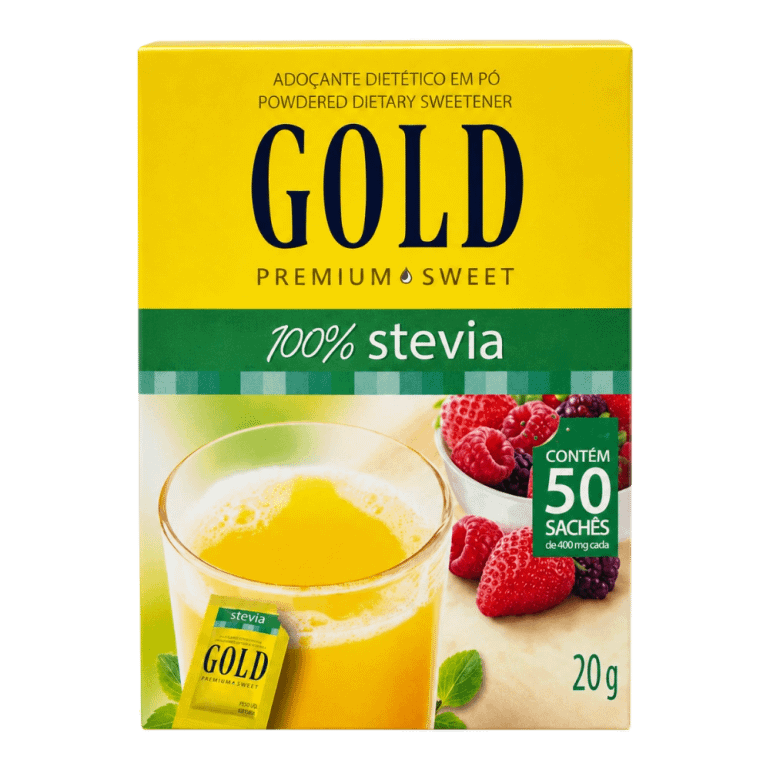
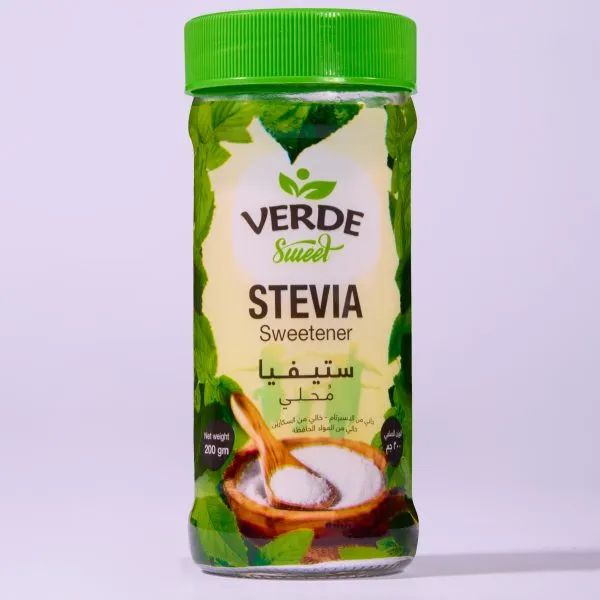
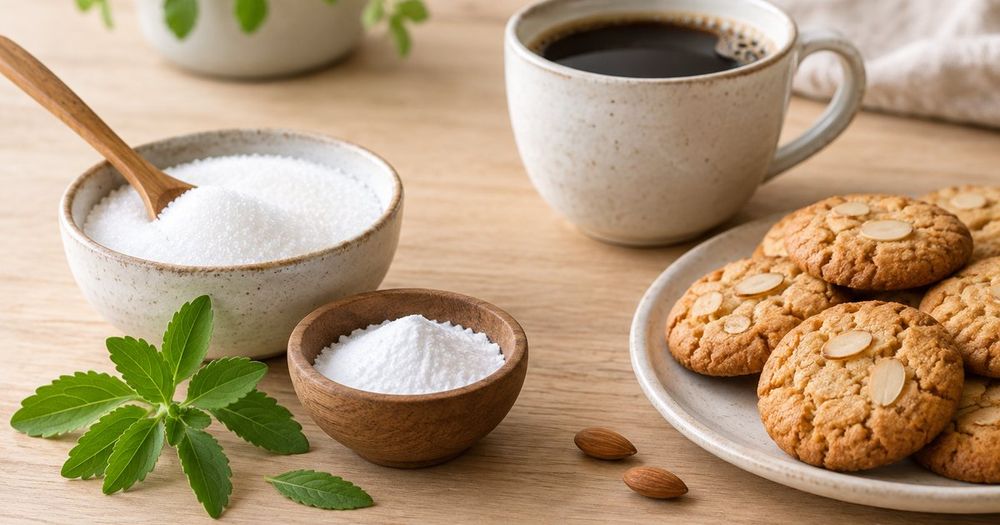
Stevia is a plant native to South America whose leaves contain compounds called steviol glycosides, such as stevioside and rebaudioside. According to the European Food Safety Authority (EFSA), these are 40 to 300 times sweeter than sugar, so only a very small amount is needed.
Importantly, what's approved as a food sweetener is the purified extract of steviol glycosides, not whole leaves or crude extracts. EFSA and the joint FAO/WHO expert committee (JECFA) set an acceptable daily intake of 4 mg per kilo of body weight (expressed as steviol), and EFSA said studies showed no carcinogenic, genotoxic or reproductive effects.
Downsides: some people notice a bitter or metallic aftertaste, and because it's so concentrated it gives no bulk or texture in baking. That's why many products blend it with other ingredients such as erythritol, maltodextrin or dextrose, and the last two have calories and affect blood sugar, so read the ingredients.
What is erythritol?
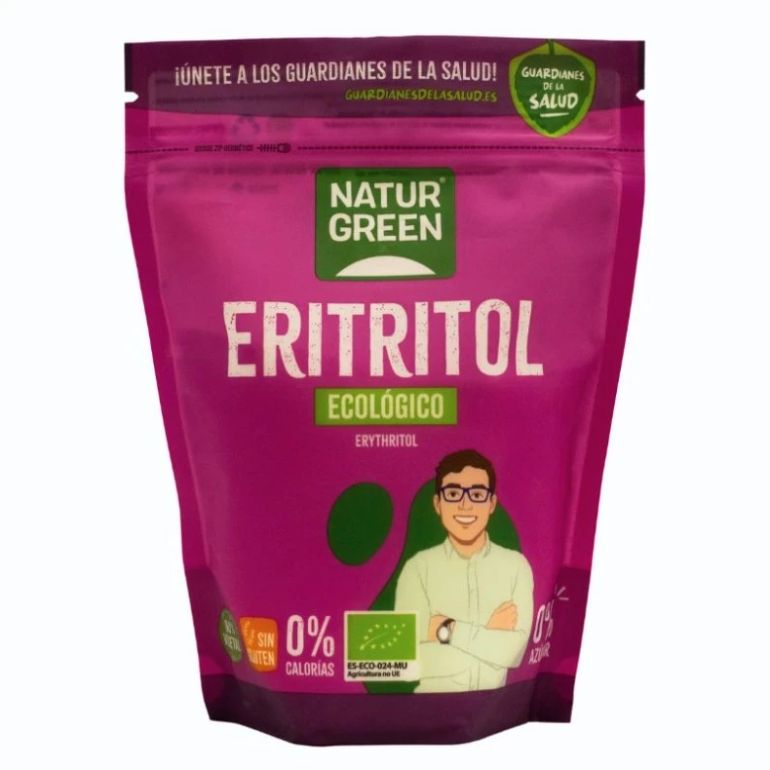
Erythritol is a sugar alcohol (polyol), not alcohol in the usual sense. It's slightly less sweet than sugar and comes as white granules that look like sugar, so it can be used in near-equal amounts in recipes. It has almost no calories because the body absorbs it and then excretes it largely unchanged in urine, as EFSA's 2023 assessment explains, so it doesn't raise blood sugar or cause tooth decay.
Downsides: it gives a cooling sensation in the mouth and can crystallise in some desserts. More importantly, large amounts can cause diarrhoea and bloating, though it's gentler on the stomach than other sugar alcohols. In its latest assessment EFSA set an acceptable daily intake of 0.5 grams per kilo of body weight, about 35 grams a day for a 70 kg person, to avoid its laxative effect, and noted that some people may exceed this given how many products contain it.
What about the erythritol and heart study?
In 2023 Nature Medicine published a Cleveland Clinic study following more than 4,000 people in the US and Europe, most of whom were undergoing cardiac risk assessment. It found that people with the highest blood erythritol levels had higher rates of heart attack, stroke and death over three years, and lab experiments suggested erythritol may make platelets more prone to clotting. In a small trial of eight healthy volunteers, an erythritol-sweetened drink raised blood levels sharply for more than two days.
How should we read this? The study was mostly observational, meaning it shows an association and doesn't prove erythritol is the cause. The body also makes some erythritol itself, and the participants were already at higher heart risk. The researchers themselves called for longer studies on its long-term safety. The balanced takeaway: no need to panic, but people with heart disease or high risk factors such as previous clots should use it in moderation and talk to their doctor.
Comparison | Stevia | Erythritol |
|---|---|---|
Source | Stevia plant leaves (purified extract) | Sugar alcohol, usually made by fermentation |
Sweetness vs sugar | 40 to 300 times sweeter | Slightly less sweet |
Calories and blood sugar | Near zero; doesn't raise blood sugar | Near zero; doesn't raise blood sugar |
Taste | May leave a slight bitterness | Cooling sensation |
Baking | Gives no bulk | Works well, sugar-like texture |
Main caveat | Blends may contain added sugars | Diarrhoea at high amounts; heart questions need study |
Do sweeteners help with weight loss?
This point is often overlooked. In 2023 the World Health Organization issued a guideline advising against using non-sugar sweeteners to control weight or reduce the risk of chronic disease, because its review found no long-term benefit for body fat in adults or children. The WHO said the guideline doesn't apply to people with pre-existing diabetes, and that the better alternative is reducing sweetness overall, for example with fresh fruit or unsweetened foods.
In practice: stevia or erythritol in your coffee beats sugar, but they aren't a magic fix. If "sugar-free" desserts lead you to eat more, the benefit disappears.
Tip: Reduce sweetness gradually. If you take two spoons of sugar in your tea, go to one, then half a spoon with a little stevia, then try without. Within a few weeks your palate adjusts to less sweetness.
Which one should I choose?
- For coffee, tea and drinks: stevia is practical; a few drops or a small pinch is enough.
- For baking and desserts: erythritol is easier because it gives bulk close to sugar, and many recipes combine it with a little stevia to reduce cooling and bitterness.
- For keto and diabetes: neither raises blood sugar, but make sure the product isn't blended with dextrose or maltodextrin.
- For people with heart disease: moderation with erythritol and checking with your doctor is wise until the evidence is clearer.
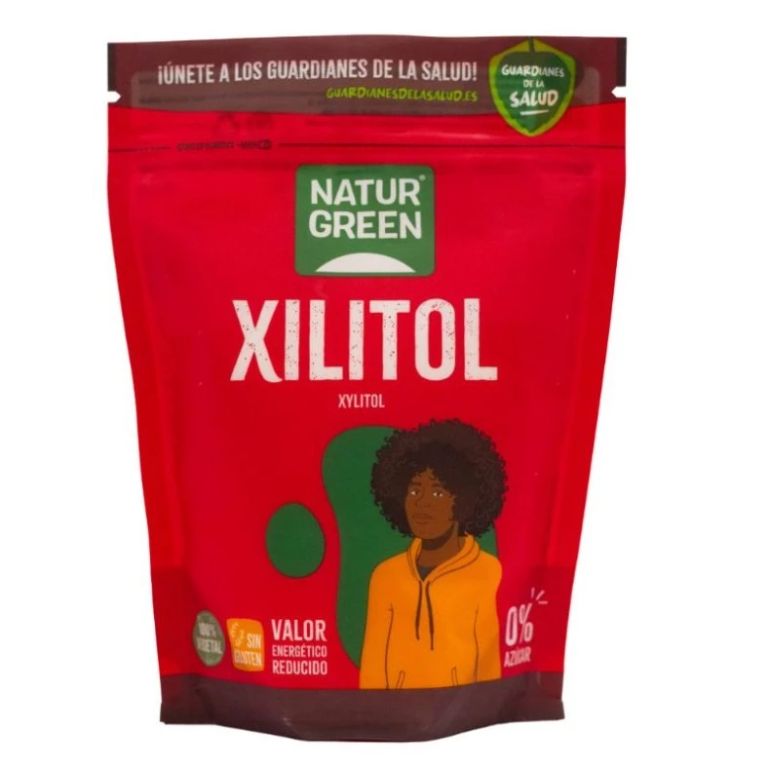
Note: Xylitol, another sugar alcohol common in chewing gum and some sweeteners, is highly toxic to dogs even in small amounts; keep it away from pets. All sugar alcohols can upset digestion in large amounts, especially in children and people with irritable bowel syndrome.
How to read a sweetener label
- Ingredient order: the first ingredient is the largest amount. A "stevia sweetener" may actually be 99% erythritol with a little stevia.
- Fillers: dextrose and maltodextrin are fast sugars and change the purpose.
- Calories per serving: "zero calories" in some countries can mean below a set threshold per serving, not exactly zero.
- Laxative warning: some products high in sugar alcohols state that excess may have a laxative effect.
Frequently asked questions
Is stevia safe in pregnancy?
The purified extract is considered safe within the acceptable intake according to regulators, but pregnant women should check with their doctor and avoid overdoing any sweeteners.
Does erythritol break keto?
No, because it barely counts as net carbohydrate and doesn't raise blood sugar. But watch the other ingredients in the product.
Can children have sweeteners?
They don't need them. It's better to get children used to less sweetness than to swap sugar for sweeteners.
Is green stevia (whole leaf) better?
Whole leaves and crude extracts haven't received the same safety assessments as the purified extract, so the approved purified product is preferable.
References
- EFSA. EFSA evaluates the safety of steviol glycosides (2010).
- EFSA FAF Panel. Re-evaluation of erythritol (E 968) as a food additive. EFSA Journal. 2023;21(12):e8430.
- Witkowski M, et al. The artificial sweetener erythritol and cardiovascular event risk. Nat Med. 2023;29(3):710-718.
- World Health Organization. Use of non-sugar sweeteners: WHO guideline (2023).
This article is for general education and doesn't replace advice from your doctor or dietitian.