
In short: Most people who exercise do well with a total daily protein intake of 1.4 to 2 grams per kilo of body weight, spread across meals of roughly 20 to 40 grams. Whey protein is a practical way to reach that number, but it isn't necessary if your food already covers it. Timing after a workout helps, but it isn't a "window" that shuts after half an hour; the daily total matters more. And the biggest driver of muscle building is still the training itself.
A protein sachet after the gym has become a habit for many people who train, and single-serve sachets have made it even easier: open, mix and go. Behind the habit are some important questions: how much protein do I actually need? Do I have to take it right after training? Is whey better than food? And how do I choose between a sachet and a big tub? This article answers based on what the research says, not on the ads.
How much protein do you need per day?
The International Society of Sports Nutrition (ISSN) published a position stand on protein and exercise. Its conclusion is that a total of 1.4 to 2.0 grams of protein per kilo of body weight per day is enough for most exercising people to build and maintain muscle. It also notes that people doing resistance training on a low-calorie diet may need more to hold on to their muscle.
A large meta-analysis published in the British Journal of Sports Medicine in 2018, pooling 49 studies and more than 1,800 participants, found that protein supplements combined with resistance training produced real but modest gains in strength and muscle mass, and that the extra benefit for muscle mass levelled off at a total daily intake of around 1.6 grams per kilo. The researchers noted that the training itself is a far stronger stimulus than the supplement.
Body weight | 1.4 g/kg per day | 1.6 g/kg per day | 2.0 g/kg per day |
|---|---|---|---|
60 kg | 84 g | 96 g | 120 g |
70 kg | 98 g | 112 g | 140 g |
80 kg | 112 g | 128 g | 160 g |
90 kg | 126 g | 144 g | 180 g |
These are totals from all sources, food and supplement together, not the amount of powder alone.
How much per meal, and when?
The ISSN recommends about 0.25 grams of high-quality protein per kilo per meal, roughly 20 to 40 grams, ideally spread every 3 to 4 hours through the day. On timing, it says the benefit occurs whether you take protein before or after training, and that the muscle-building effect of exercise lasts at least 24 hours, although it gradually fades with time.
In practice: don't worry if your post-workout shake is an hour late. What matters is reaching your daily total and having a protein-containing meal reasonably close to your session, before or after.
Tip: If you train in the morning without breakfast, the protein meal after training matters more for you than for someone who ate a protein-rich meal two hours before.
Why whey specifically?
Whey is milk serum protein. It digests quickly and is rich in essential amino acids, including leucine, which plays an important role in triggering muscle protein synthesis. The ISSN notes that rapidly digested proteins rich in essential amino acids and leucine are the most effective at stimulating muscle building, and that a single dose should ideally contain 700 to 3,000 mg of leucine.
That doesn't make food inferior. The same society says exercisers can meet their needs from whole foods, and that supplements are a practical way to ensure quantity and quality, especially with a busy schedule or a low appetite after training. Eggs, Greek yoghurt, laban, chicken, fish and legumes are all good sources.
Whey concentrate, isolate or clear?
- Concentrate: the most common and usually the cheapest, with slightly more lactose and fat.
- Isolate: filtered further, so it usually has more protein per serving and less lactose, and may suit people with mild lactose sensitivity.
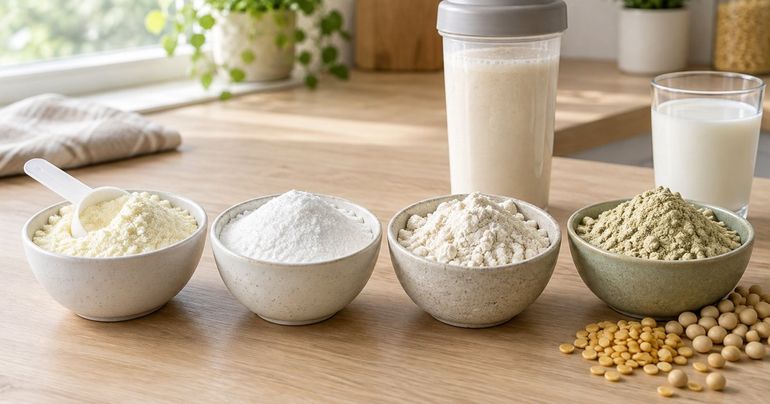
- Clear whey: an isolate with a juice-like texture instead of a milky one, which some people prefer in hot weather.
If you have a milk allergy (not lactose intolerance), whey of any kind isn't suitable for you; look for a plant protein.
Sachet or tub? Work out the price per serving
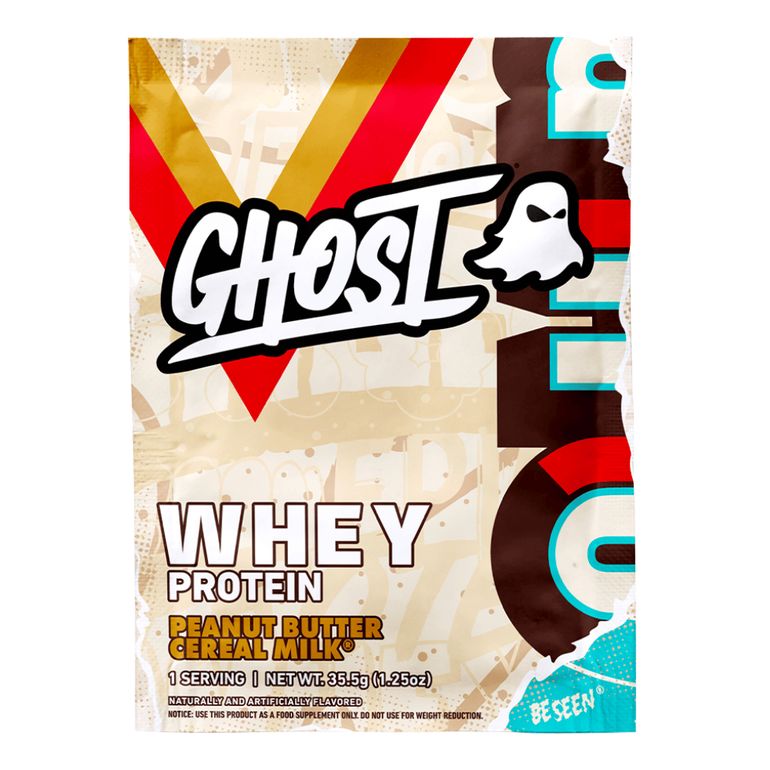
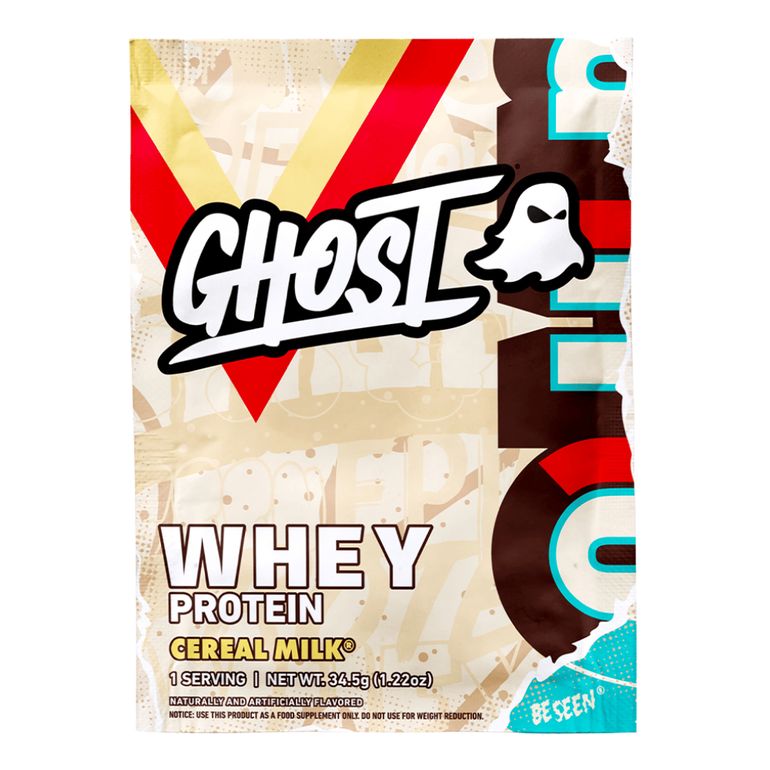
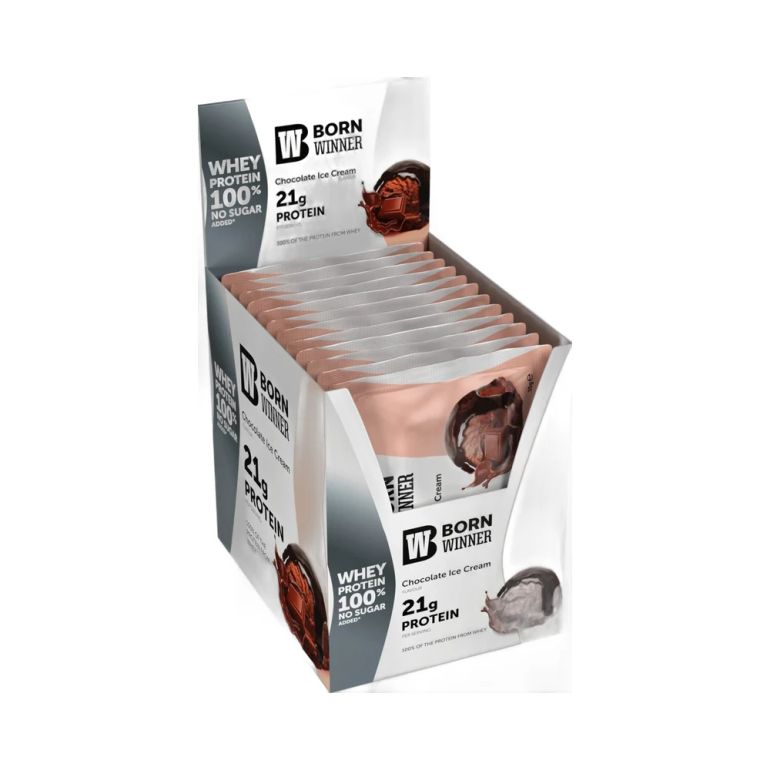
Single-serve sachets are great for trying a flavor before buying a full tub, and for travel and the gym bag. But they're usually more expensive per serving. An example from our store prices at the time of writing: one Ghost sachet costs 16.75 riyals, while a 28-serving Ghost tub costs 277 riyals, about 9.9 riyals per serving. The simple rule: try the flavor with a sachet, and if you like it and use it regularly, a tub or a box of sachets is better value. Also compare grams of protein per serving, not just the price, because serving sizes differ between brands.
How to read a protein label
- Protein per serving: and what share of the serving weight it represents. A 30 g serving with 24 g of protein is different from a 40 g serving with the same amount.
- Sugar and calories: some sweet flavors contain more sugar or carbohydrate. That's fine if it fits your plan, but know it.
- Sweeteners: most proteins use sucralose, stevia or sugar alcohols. Large amounts upset some people's stomachs.
- Allergens: check for milk, soy, gluten and nuts if they matter to you.
- Third-party testing: independent testing seals give more confidence that the contents match the label. For more on evaluating supplements, read our guide to evaluating a supplement before you buy.
Ideas for using a protein sachet beyond the shaker
- Mix it into overnight oats in place of some of the milk.
- Stir it into Greek yoghurt with fruit for a quick high-protein snack.
- Blend it into a smoothie with banana, milk and a spoon of nut butter.
- Use it in pancake batter in place of some of the flour, bearing in mind that high heat can make the texture drier.
Note: Protein supplements are for healthy adults and aren't a substitute for children's meals. If you have kidney or liver disease, are pregnant or breastfeeding, or follow a therapeutic diet, talk to your doctor or dietitian before increasing protein or using supplements.
Common mistakes
- Relying on the supplement and neglecting food: protein powder is a supplement; whole foods give you fiber, vitamins and minerals you won't find in a shake.
- Doubling servings for no reason: if you already meet your daily need, extra servings won't build more muscle according to the available evidence, but they add calories and cost.
- Expecting results without regular training: protein supports training results; it doesn't create them on its own.
Frequently asked questions
Do I need whey protein if I train twice a week?
Probably not, if your meals contain good protein sources. A supplement helps when it's hard to meet your needs from food.
Do I have to drink protein within 30 minutes of training?
No. The evidence suggests that the daily total and spreading protein across the day matter more than specific minutes after training.
Does protein cause weight gain?
Protein has calories like any food. If your total calories exceed your needs, you'll gain weight, whether from protein or anything else.
Is whey protein safe every day?
For healthy adults within the amounts above, it's considered a normal part of the diet. Anyone with a chronic health condition should check with their doctor first.
References
- Jäger R, et al. International Society of Sports Nutrition Position Stand: protein and exercise. J Int Soc Sports Nutr. 2017;14:20.
- Morton RW, et al. A systematic review, meta-analysis and meta-regression of the effect of protein supplementation on resistance training-induced gains in muscle mass and strength in healthy adults. Br J Sports Med. 2018;52(6):376-384.
- NIH Office of Dietary Supplements. Dietary Supplements for Exercise and Athletic Performance.
This article is for general education and doesn't replace advice from your doctor or dietitian.