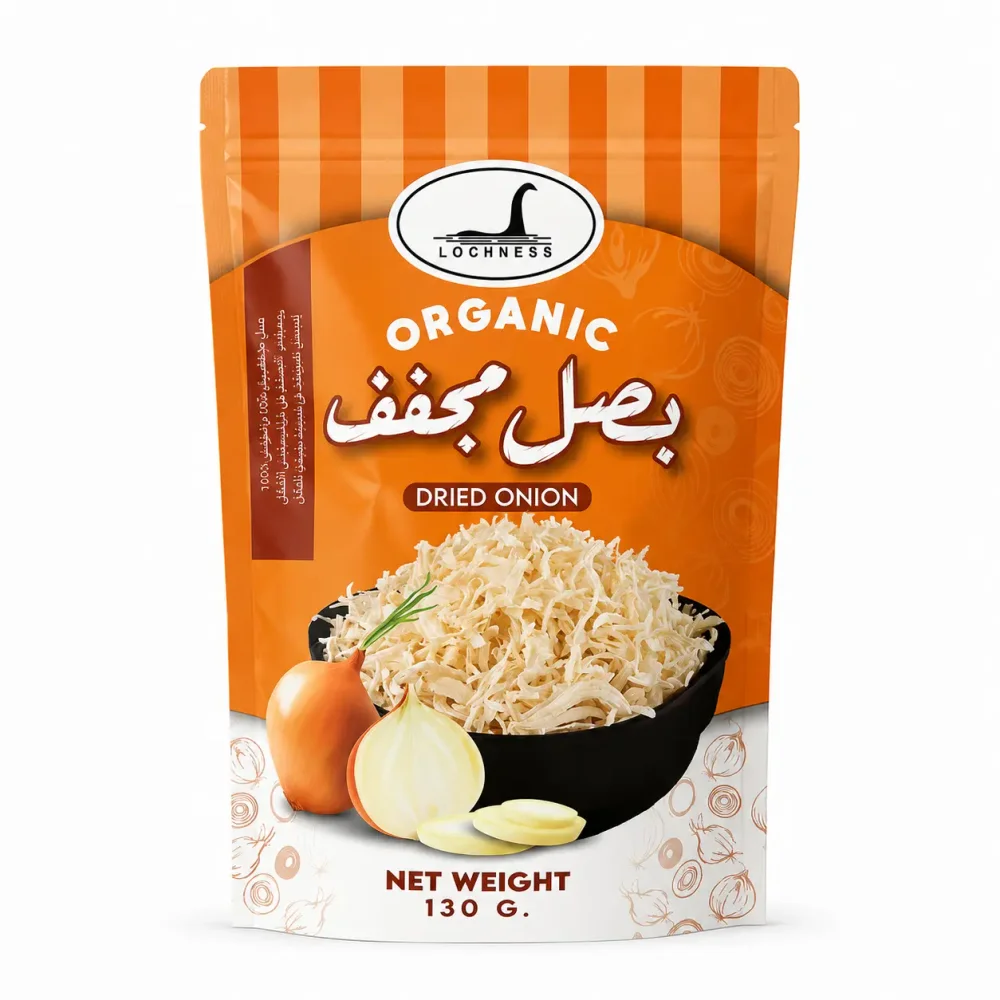
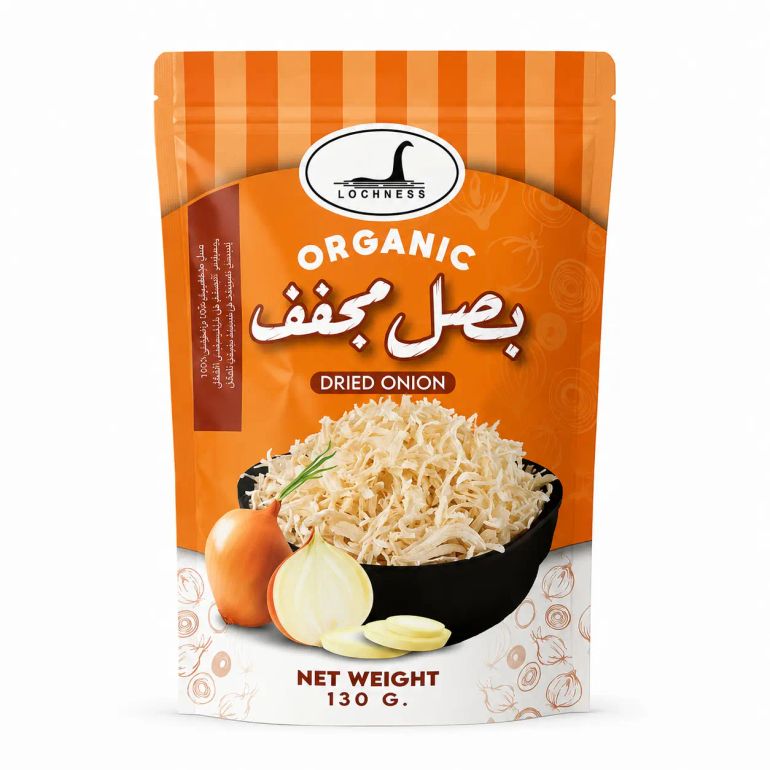
Fully dried onion shreds that keep real onion flavour and go straight into the pan, or into water for a few minutes first. It removes the most tedious step in the kitchen.
▍ Quick overview
Dried onion is fresh onion with the water removed — no salt, no anti-caking agents, no flavourings. What is left are light shreds that keep the onion flavour and come back close to their original texture once they meet liquid. Lochness produces it in Sudan's River Nile State.
Onion is about 90% water, so a 130 g pack is roughly equivalent to over a kilo of fresh onion — with no peeling, no chopping board, no tears and nothing going soft in the fridge. It is also not onion powder: these are whole shreds that give texture and a flavour closer to the real thing.
▍ How to use it
Straight into the pot
Add it to soups, stews, sauces and rice at the start of cooking; it takes up the liquid in the dish and rehydrates with no extra step.
Rehydrating it
Soak in warm water for ten to fifteen minutes, drain, and use it like fresh onion in salads, fillings and doughs.
How much fresh onion does it replace?
As a rough rule: one tablespoon of dried onion is about a quarter cup of chopped fresh onion, and three tablespoons come close to a medium onion.
Spice blends and rubs
It works in dry rubs, grill blends and burger seasonings, giving clear onion flavour without adding moisture.
For bread and baking
Scatter it over bread, pies and bakes before baking; it toasts and gives both flavour and a distinctive look.
▍ Nutrition
Per 100 g
Energy 350 kcal · Protein 10.5 g · Fat 1.0 g · Carbohydrate 82.5 g · of which sugars 39.5 g · Dietary fibre 12 g · Vitamin C 23 mg · Phosphorus 51 mg · Iron 3.2 mg · Calcium 115 mg · Magnesium 35 mg · Potassium 800 mg · Zinc 3.5 mg
Values are per 100 g of dried onion as printed on the pack. In practice you use about a tablespoon (roughly 6 g), which is around 21 kcal and 2 g of sugars. Those sugars are the onion's own, and they read high simply because the water has been removed.
▍ Before you use it
- The only ingredient is dried onion, and the pack declares no allergens.
- The pack carries no "gluten free" statement and no cross-contact statement, so we have not tagged this product gluten free.
- Keep the pack well sealed; humidity makes the shreds clump and lose their crispness.
- Vegan by the nature of the ingredient.
▍ Green Spot's take
What really sells this is time. Onion is the longest-effort step in most dishes, and here you open the pack, add a spoon and you are done. It also beats commercial onion powder on the label: one ingredient, no salt, no anti-caking agents — you read the ingredients and find "onion" and nothing else.
Very practical for travel, camping and small kitchens, and for any week when you want to cook fast. One tip: try it in a burger seasoning blend, or scattered over bread before baking.
▍ Frequently asked
Does it taste like fresh onion?
Very close in cooked dishes, because the shreds take up liquid and regain their texture. The difference shows more in raw use, so soak it first for salads.
How many spoons equal an onion?
Three tablespoons come close to a medium onion, and one tablespoon is about a quarter cup of chopped onion — rough estimates that vary with onion size.
Do I always need to soak it?
No. In soups, stews and sauces it goes in directly. Soaking helps for salads, fillings and doughs with little liquid.
Does it contain salt or additives?
No. The only ingredient is dried onion, so salt and spice stay under your control.
How should I store it?
Somewhere dry, away from heat and humidity, with the pack well sealed so the shreds do not clump.
Green Spot review: ingredients, nutrition values and origin were checked against the pack label. Last reviewed: September 2026.
The manufacturer may update the recipe or packaging, so the label on the pack remains the primary reference. This information is for general nutritional purposes and is not a substitute for professional advice.